What matters most
- Microneedling plus minoxidil improved hair count and diameter more than minoxidil alone across several small trials.
- The studies used different devices and methods, so there is no proven home dermastamping routine.
- The FDA has not cleared microneedling devices for hair loss or for use with topical medicines.
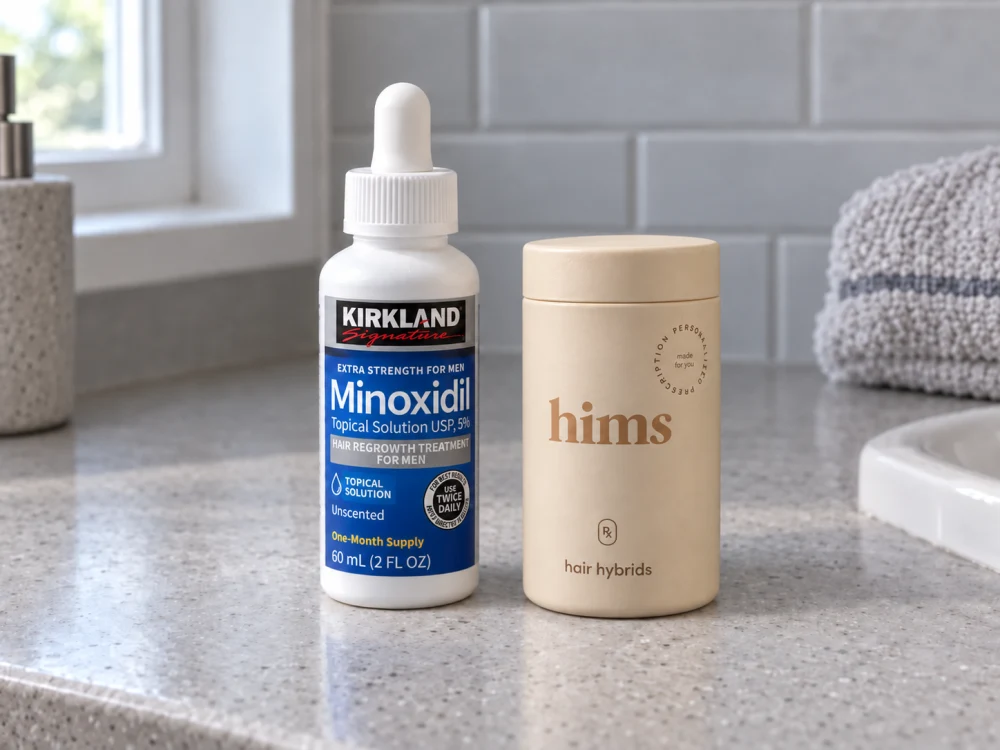
Microneedling plus minoxidil looks promising, but the evidence is not settled enough to turn it into a home formula. A 2025 review of 12 randomized trials found better hair count and diameter with the combination than with minoxidil alone.
The studies were also very different from one another. They used rollers, motorized devices, different treatment intervals, different study lengths, and different ways to count hair. That makes the average result harder to apply to one person or one device.
An early randomized pilot in 100 men reported a much larger hair count change with microneedling plus minoxidil than with minoxidil alone. A later randomized study also favored the combination, although its authors said the visible response was not cosmetically significant.
A randomized study in Chinese men found the combination performed better than either treatment alone. Taken together, the trials point in the same general direction, but most were small and short.
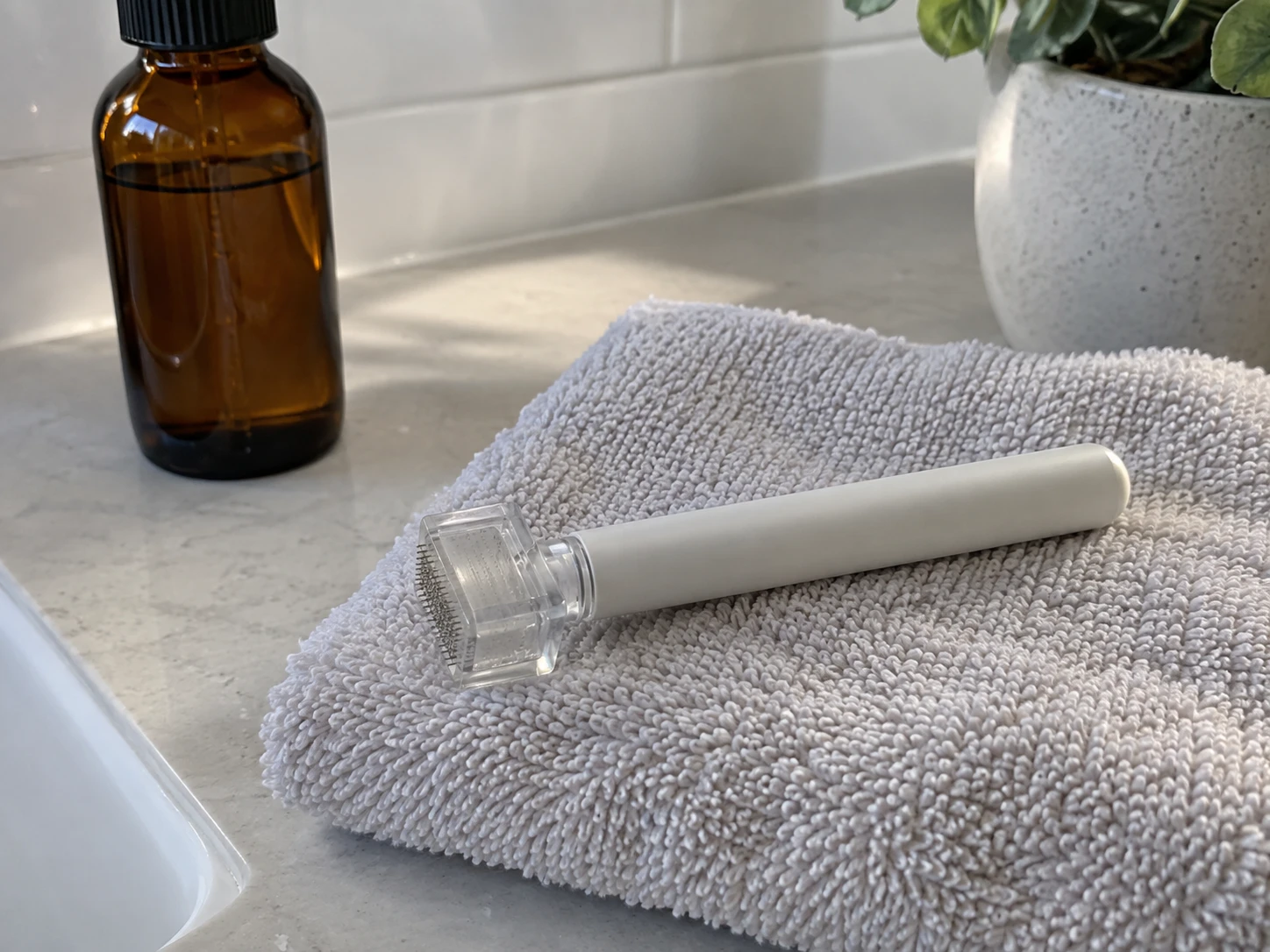
A stamp is one way to create microneedling punctures. Most hair loss trials studied rollers or motorized devices instead. There is no strong direct trial showing that a consumer dermastamp works better than a roller or a clinical pen.
The 2025 review did not find a clear outcome difference by device category or needle depth. That does not prove every device or method is equal. It means the available studies were not able to identify a reliable winner.
The FDA has not cleared any microneedling device for hair loss. It has also not cleared these devices for delivering minoxidil or another topical product into the skin. Published study protocols cannot replace an approved instruction or personal medical guidance.
Possible risks include bleeding, bruising, infection, pigment changes, scarring, and deeper tissue injury. Topical minoxidil labels also say not to use the product on a red, inflamed, infected, irritated, or painful scalp.
Some trials paused minoxidil around a procedure, but their timing should not be treated as a universal safety rule. A clinician can assess scalp disease, infection risk, a history of keloids, bleeding concerns, and medicines that affect clotting.
Hair can look fuller after a styling change, a shorter cut, different light, or a small shift in camera angle. If you are tracking a plan made with a clinician, keep the photo method stable and record the true dates of any changes.
Plume gives each session the same core views and keeps notes beside the timeline. That makes the record easier to review without pretending that a photo can measure microscopic hair changes or prove which part of a routine worked.