What matters most
- Oral minoxidil has not shown a clear overall advantage over topical minoxidil across randomized evidence.
- A newer small trial favored oral treatment, but its topical comparison did not match the current United States label schedule for men.
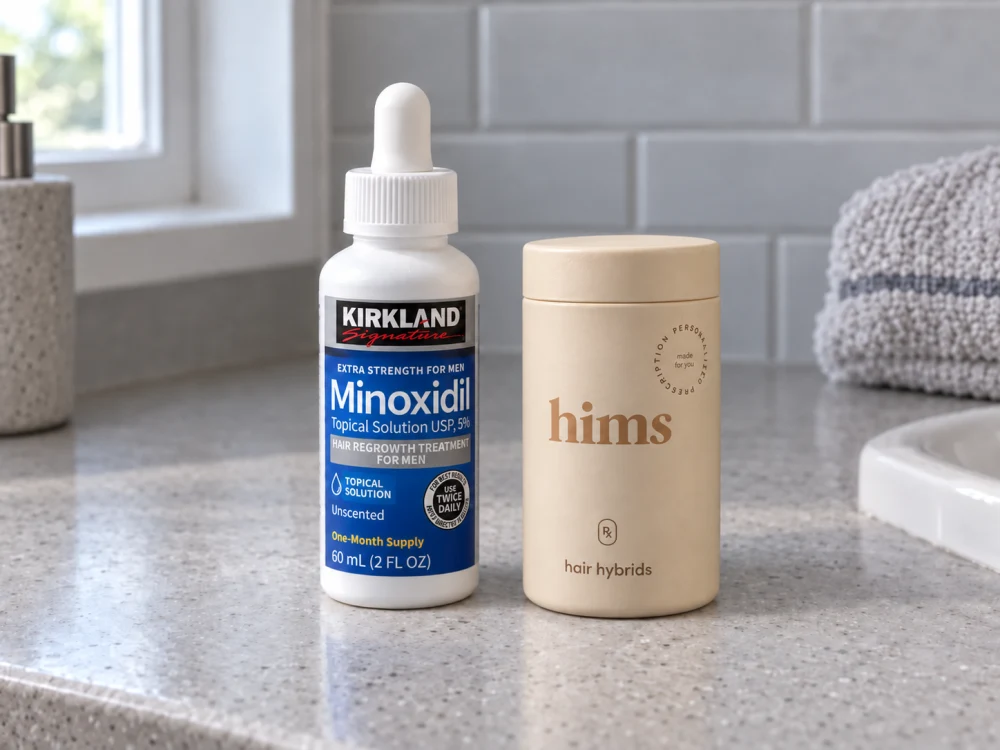
- Oral treatment causes more unwanted hair growth, while topical treatment causes more scalp irritation for some people.
Oral minoxidil is not simply stronger or better. A well designed 2024 randomized trial in men did not find oral treatment superior to topical treatment on its main hair density measures after 24 weeks. Blinded photos favored oral treatment at the crown, but not at the frontal scalp.
A smaller 2025 trial of 42 men favored oral treatment. That result matters, but the topical group used treatment less often than the current United States label directs for men. One small study should not erase the larger and more mixed body of evidence.
A meta analysis of four randomized trials and 279 people found no significant difference in hair density or hair diameter between oral and topical minoxidil. Those trials followed people for roughly six to nine months and used different oral doses, topical strengths, and study populations.
The newer 2025 trial was published after that evidence set and reached a different result. The honest conclusion is that oral minoxidil can work, but current research does not support a universal claim that it works better for everyone.
Oral minoxidil circulates through the body. In the 2024 trial, unwanted hair growth and headache were more common with oral treatment. The pooled randomized evidence also found about twice the risk of unwanted hair growth with oral treatment.
Topical minoxidil caused more scalp eczema and itching in the same trial. That can make a routine difficult to maintain, but it is different from the systemic risks attached to a prescription tablet.
The FDA label for oral minoxidil identifies it as a blood pressure medicine and says hair growth is not an approved indication. It also carries serious warnings involving fluid retention, heart rate, angina, and fluid around the heart. Lower doses used in hair studies do not make those warnings irrelevant.
Some people struggle with scalp residue, styling, irritation, or remembering a topical routine. Others prefer to avoid a medicine that acts throughout the body. Those practical differences may matter more than a small average difference in a study.
This is a decision to make with a qualified clinician who knows your health history. Heart disease, kidney disease, low blood pressure, pregnancy, nursing, and other medicines can change the risk discussion.
Whichever route you discuss with your clinician, give the record enough time and keep the setup consistent. Use the same views, lighting, hair state, and camera distance each month. Add dated notes for changes in treatment, shedding, irritation, or missed use.
Plume keeps those photos and notes together so you can review a real timeline instead of relying on memory or a single good mirror day. The record can support a better conversation, but it cannot prove that a treatment caused every visible change.