The start date and changes stay clear
The routine history keeps important dates in order instead of leaving them to memory.
An ongoing routine can be hard to reconstruct months later. Plume keeps the schedule you entered, adherence, observations and repeatable photos in date order.
Use Plume to remember dates and observations. Medication decisions belong with a qualified clinician.

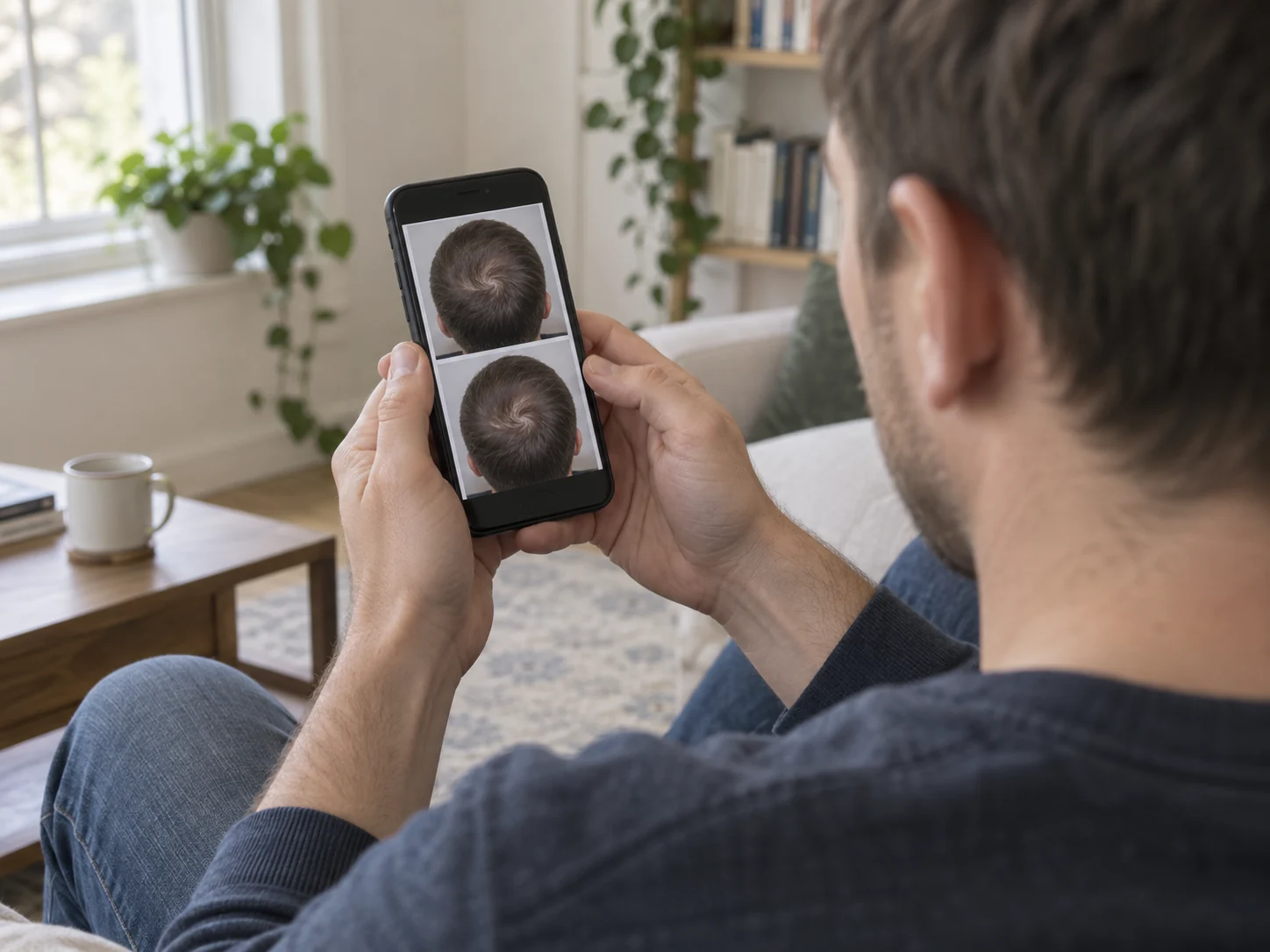
A finasteride progress tracker can preserve the start and change dates you enter, completed and missed routine entries, factual symptoms and repeatable scalp photos. Plume keeps Hairline and temples, Top and part and Crown photos beside that history. You can compare dates yourself and create a discussion PDF for a clinician. Plume does not prescribe finasteride, assess side effects or decide whether the treatment is working.
Record the start date and schedule from your prescriber so the history begins with facts you know.
Mark completed and missed entries and date a clinician directed change when it happens.
Add factual symptoms and periodic Hairline, Top and Crown photo sets to the timeline.
Review selected dates and create a discussion PDF when you need to explain the sequence to a clinician.

The routine history keeps important dates in order instead of leaving them to memory.
Plain notes make later conversations more specific without interpreting the symptom for you.
Periodic Hairline, Top and Crown sets sit beside the routine record for manual comparison.
For an ongoing prescription routine, the start date, adherence and instructed changes can matter later. Plume keeps those details chronological and beside the photos you add.
Use the tracker to reflect the plan you received. Questions about starting, stopping or changing finasteride belong with a prescriber or another qualified clinician.
A short note can preserve the date, description and surrounding context of a symptom. That gives you something concrete to discuss instead of an uncertain memory.
Plume does not monitor or assess side effects. A timeline also cannot prove that an observation is connected to finasteride. Seek medical guidance for symptoms or safety concerns.
Each photo entry follows Hairline and temples, Top and part and Crown. Keeping the sequence and photo setup familiar makes distant dates easier to place in the same history.
Choose two dates for manual comparison or create a discussion PDF for a clinician visit. Plume does not calculate density or label the treatment effective or ineffective.
No. Plume keeps a dated photo, routine and notes record. It does not evaluate efficacy or connect a visible difference to finasteride.
You can record factual symptoms, but Plume does not monitor, screen or assess side effects. Contact a qualified healthcare professional about symptoms or safety concerns.
No. Discuss starting, stopping or changing finasteride with an appropriate clinician.
Yes. Plume can create a discussion PDF from the history you selected to support a clinician conversation.