What matters most
- Lead with the concern, the first date noticed, and the areas involved.
- Choose a small set of comparable photos instead of sending every image.
- Include current products, prescriptions, symptoms, context, and questions without diagnosing yourself.
Write what you noticed, when you first noticed it, which areas are involved, and whether the change seemed gradual or sudden. Add whether shedding, scalp symptoms, or body hair changes are part of the concern.
Keep this section factual. A dermatologist will examine the scalp and decide what medical evaluation is appropriate.
- Main concern in one sentence.
- First date or best honest estimate.
- Areas involved, such as hairline, temples, part, top, or crown.
- Gradual, sudden, patchy, or unclear pattern.
Include the baseline, the latest clear session, and a few middle dates that show the timeline. Use the same view, light, crop, and hair state when possible.
Keep the real dates and setup notes visible. If one photo used wet hair, a new haircut, or different light, mark it instead of removing the context.
List current medicines, supplements, and hair products with the names shown on the labels. Include start and stop dates when known. Record relevant illness, surgery, childbirth, weight changes, stress, and family history when they apply.
Add scalp symptoms and personal observations. If you think a prescription may be connected, record the concern and ask the prescriber. Do not stop it based on the record alone.
Write the two or three questions that matter most. You might ask what types of hair loss need to be considered, whether any tests are appropriate, or what changes should prompt a follow up.
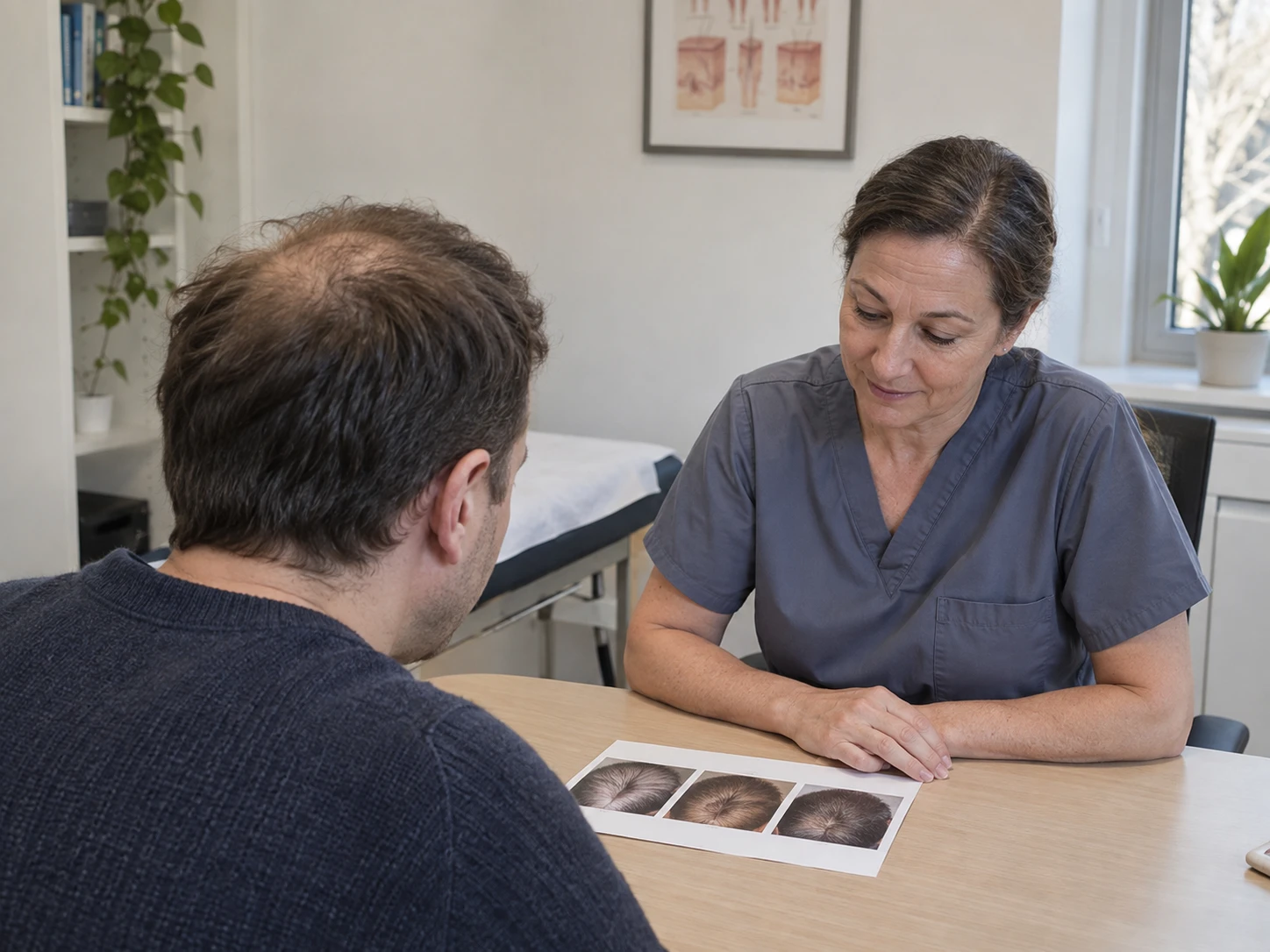
Plume can create a non diagnostic summary for a clinician conversation. It does not decide the diagnosis or recommend treatment. The goal is to make the appointment more specific, not to replace it.