
What matters most
- Record when you noticed the change and how long it lasted.
- Add relevant health, stress, routine, and scalp context without naming the cause yourself.
- Do not stop a prescribed medicine based on a tracking note.
Write the first date you noticed more or less shedding and the situations where you see it, such as washing, brushing, on a pillow, or throughout the day. Use the same words each time so the notes are easy to scan.
Avoid forcing an exact hair count when you cannot collect it consistently. A simple personal scale such as usual, more than usual, or much more than usual can be easier to repeat.
The American Academy of Dermatology notes that excessive shedding can follow childbirth, major stress, illness, high fever, surgery, substantial weight loss, or a change in some medicines. A change may appear after the event rather than on the same day.
Record dates for relevant events without deciding that one of them caused the shedding. Include treatment starts or stops, but never stop a prescribed medicine based on the log. Ask the prescriber when a medicine is part of the concern.
- Date the shedding change was first noticed.
- Recent illness, fever, surgery, childbirth, stress, or major weight change.
- Medication or treatment changes and their actual dates.
- Haircut, wash routine, hairstyle, or product changes.
Note whether the change feels diffuse or appears in one area. Also record pain, burning, marked itching, redness, scale, sores, crusting, pus, or a smooth patch.
These details matter because shedding and hair loss are not the same thing, and some scalp conditions need medical assessment. Photos can preserve the visible pattern, but they cannot identify the cause.
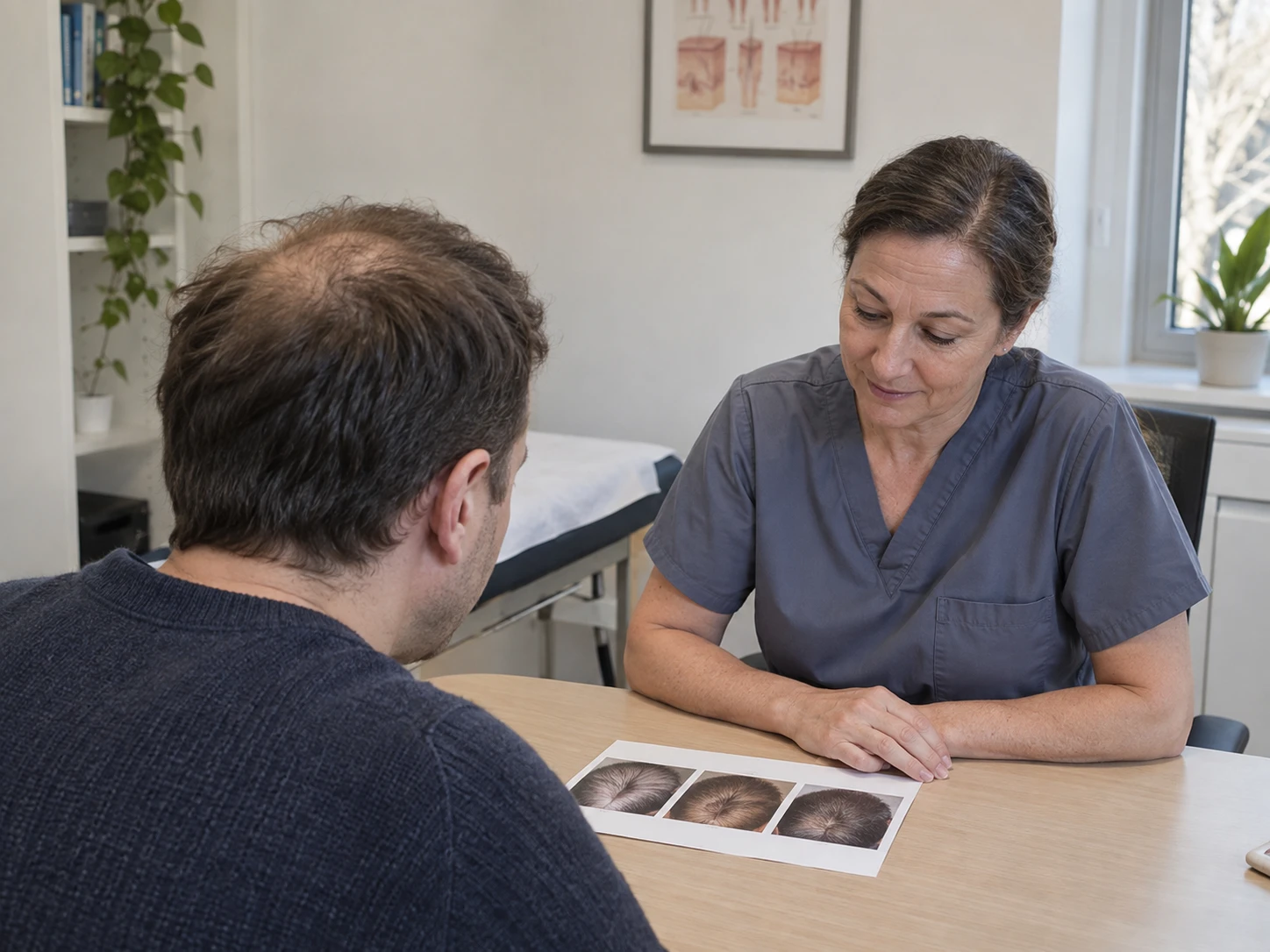
Bring the dates, notes, treatment list, and a small set of consistent photos to a clinician if you are worried. Sudden or patchy loss and hair loss with scalp symptoms deserve evaluation.
A strong question is specific, such as whether the timing or pattern changes what should be evaluated. Plume organizes what you observed. The clinician handles diagnosis and treatment advice.