What matters most
- A baseline is an honest starting point, not a dramatic before photo.
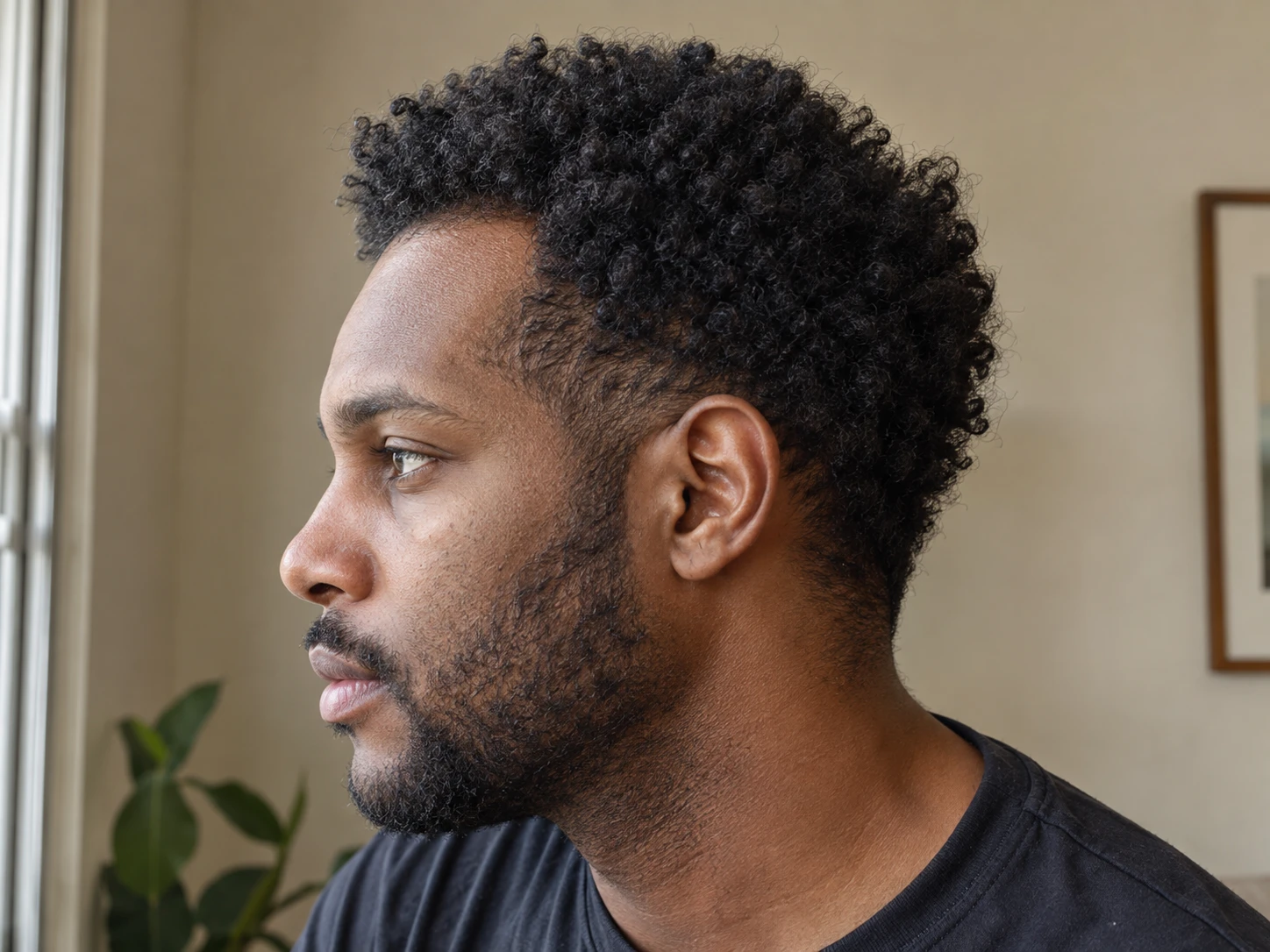
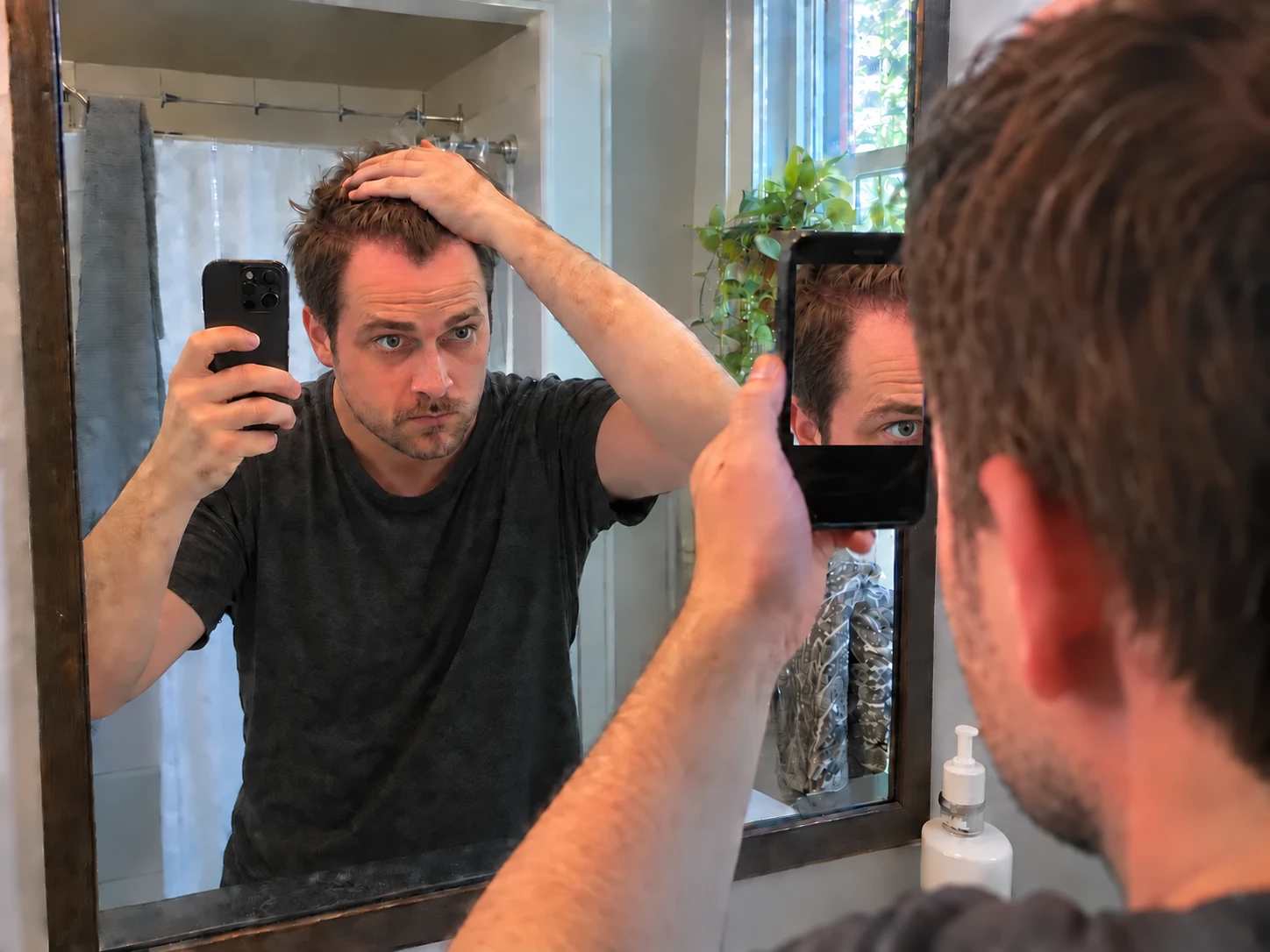
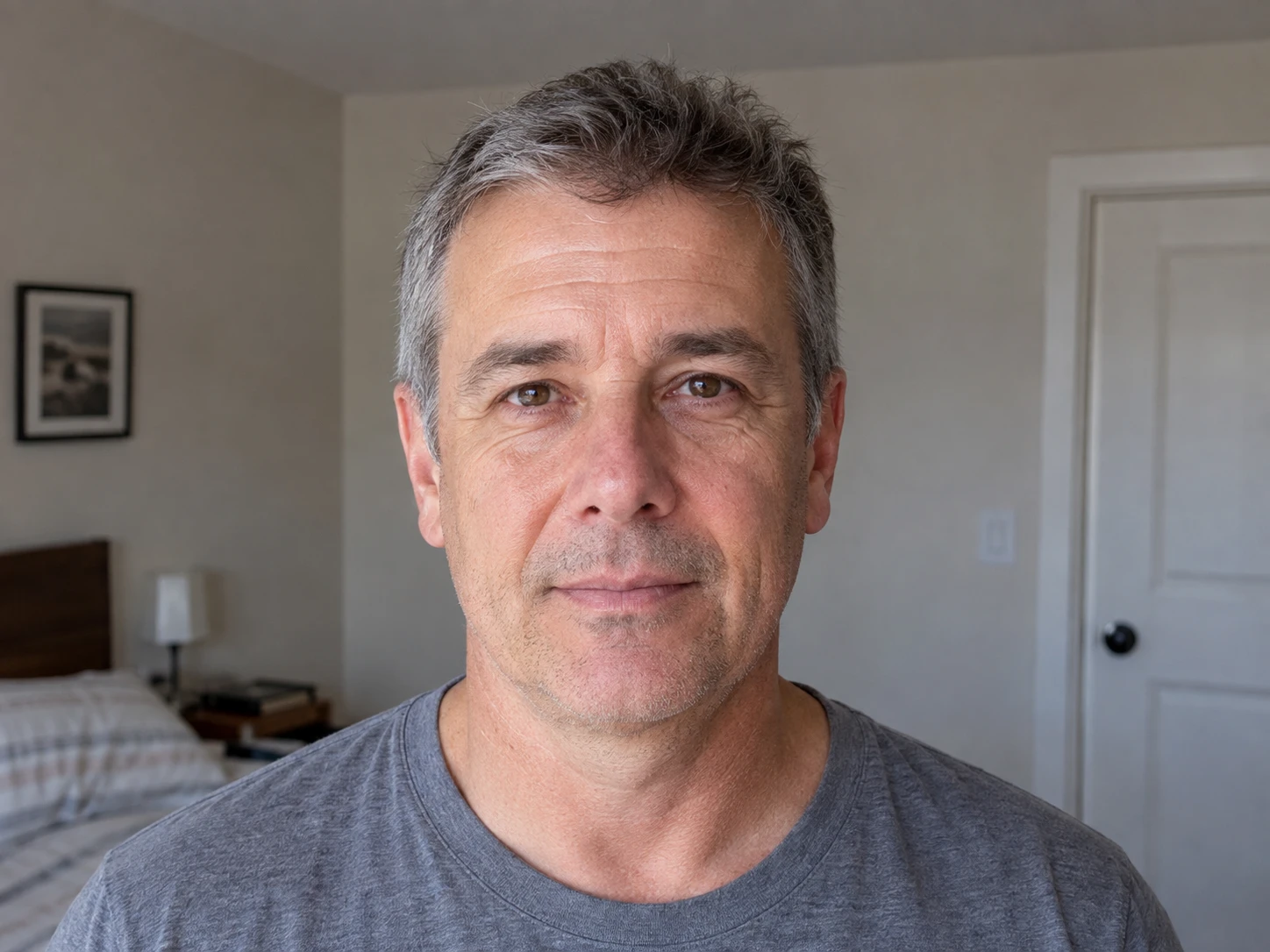
- Capture the hairline, temples, top, and crown during one controlled session.
- Save enough setup detail to recreate the photos later.
List the areas you want to follow before opening the camera. A compact set is the front hairline, left temple, right temple, top, and crown. Add another view only when it covers a distinct area you plan to capture again.
The baseline does not need to prove anything. Its job is to show how your hair looks on a real date under conditions you can recreate.
Choose the background, light source, phone lens, and distance. Mark where you stand and where the phone sits. Keep the camera fixed instead of moving closer for each area.
Prepare your hair one way for the full set. Record whether it is dry or wet, how it is parted, whether you used product, and roughly when it was washed.
- Clean the camera lens.
- Turn off appearance filters.
- Use one lens without digital zoom.
- Check every photo for sharpness before ending the session.
Record the real capture date, room, light position, phone height, and pose cue. A cue can be as simple as chin level or toes on the floor marker.
Add context that could affect later comparisons, such as a fresh haircut, a new part, wet hair, or a different styling product. Keep the note short enough to scan next month.
A few days later, try to recreate one or two views using only your saved instructions. This is a setup test, not a progress check.
If the crop or lighting is hard to match, improve the note now. Keep the original baseline even if a later session looks cleaner. Moving the starting point defeats the reason for having one.