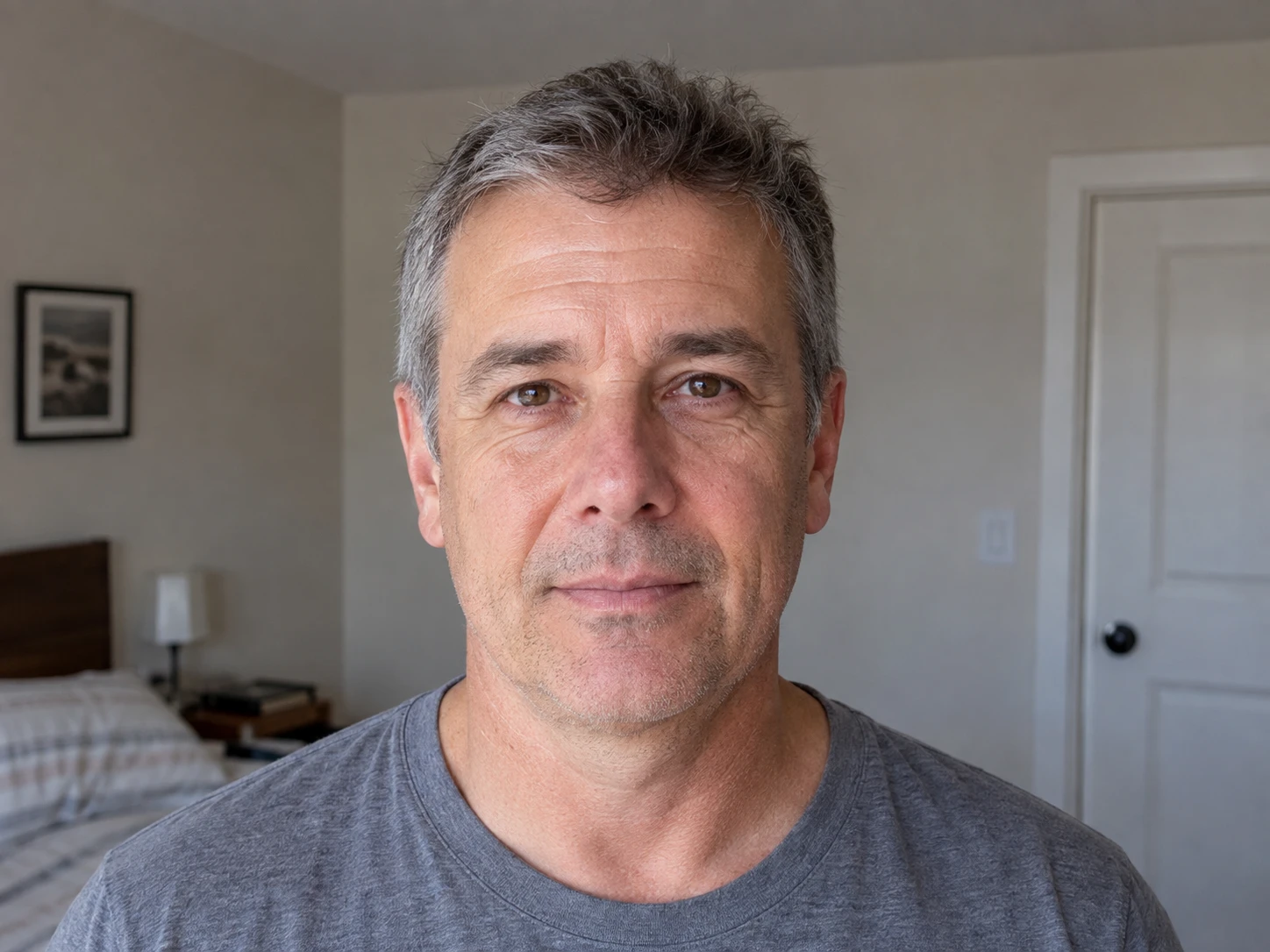
One complete place to start
Three named views give later entries a clear reference.
A useful tracking habit should be easy to repeat and calm enough to keep. Start with three views, save the context that matters and compare matching dates later.
Tracking documents appearance over time. It cannot determine the cause of hair loss.
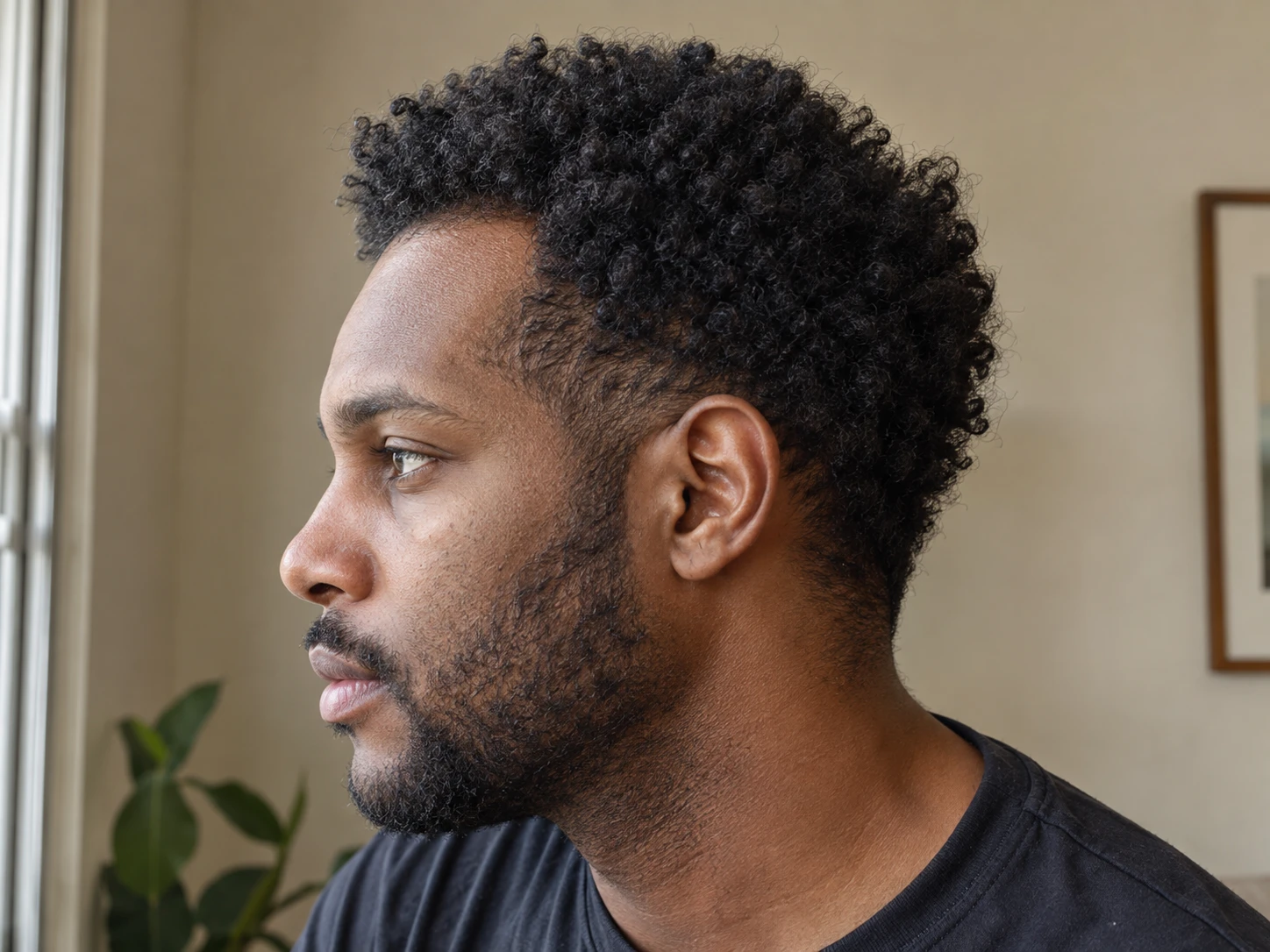
To track hair loss, create a dated baseline with Hairline and temples, Top and part and Crown photos. Repeat those views in similar practical conditions on a schedule that fits your plan. Record factual routine changes, adherence, symptoms, haircuts and photo setup differences. Compare matching views from two dates. Plume organizes this record and can create a discussion PDF, but it does not diagnose hair loss or measure change.
Choose whether the record is for your own baseline, a routine history or a future clinician conversation.
Capture Hairline and temples, Top and part and Crown in a setup you can revisit.
Use timing that fits your plan and any clinician guidance instead of checking every reflection.
Keep routine changes and observations beside the photos, then review matching views across selected dates.

Three named views give later entries a clear reference.
A familiar room, hair setup and view order reduce avoidable photo differences.
Routine adherence, symptoms and capture changes stay beside the right date.
A baseline is a starting record, not a verdict. Capture all three Plume views under one date and use a setup you can reasonably repeat.
Add the details that could change how you read the photo later. A haircut, wet hair, a different part or unusual lighting can all matter. One plain sentence is enough.
A defined schedule gives every photo session a purpose. Choose timing that fits the plan you already follow and any guidance from your clinician. Plume organizes the dates but does not set a medical cadence.
Follow the same Hairline, Top and Crown prompts at the next session. Keep the real setup similar and note a difference when you cannot.
Match Hairline to Hairline, Top to Top and Crown to Crown. Use side by side, slider, blend, zoom and pan to inspect two dates. Consider light, styling, camera distance and part placement before treating a difference as meaningful.
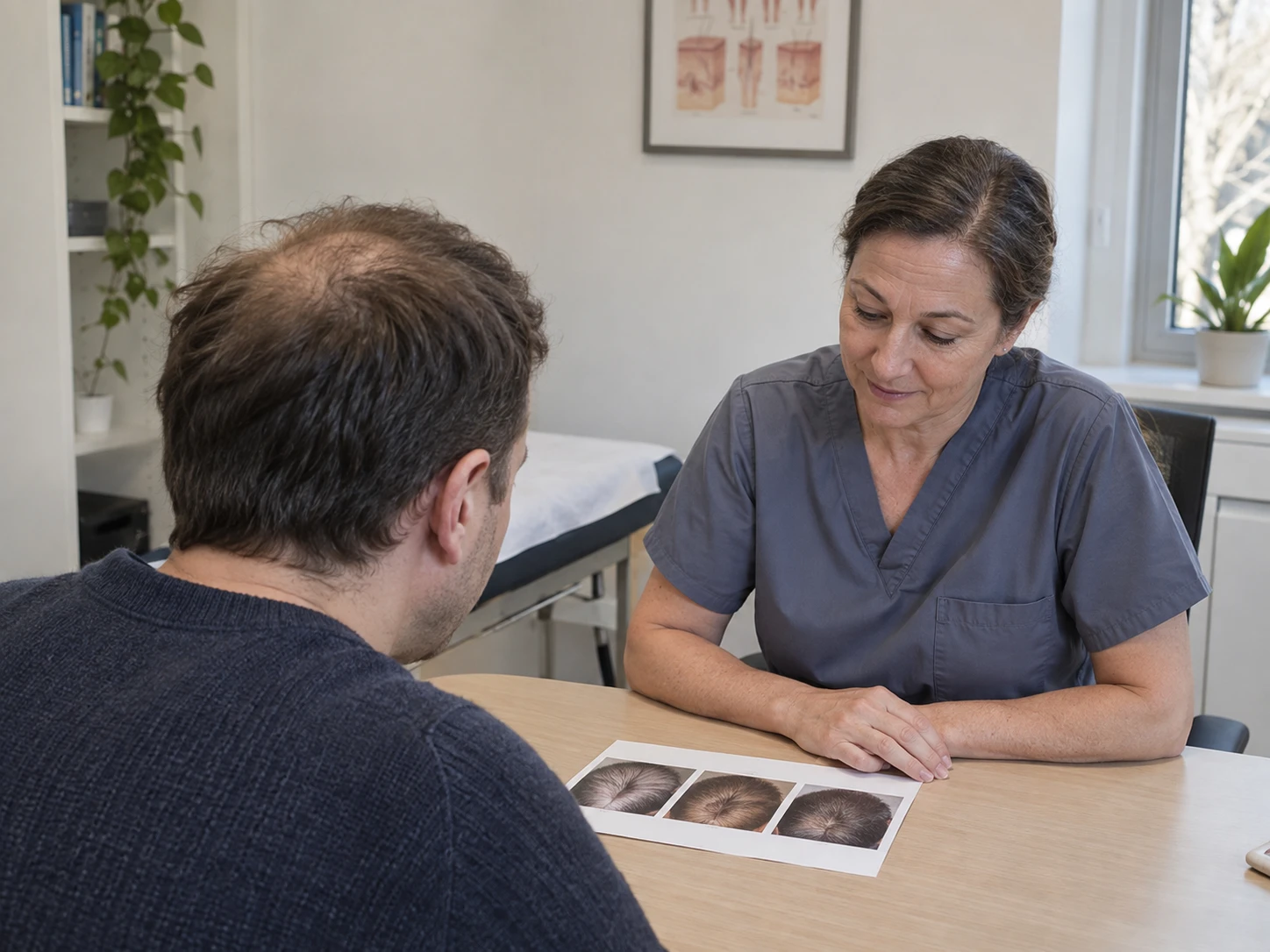
Photos document appearance. They cannot diagnose a condition, explain why something changed or decide which treatment is appropriate. Bring the record or a discussion PDF to a qualified clinician when you need medical interpretation.
Take dated Hairline and temples, Top and part and Crown photos in similar conditions. Add factual routine and symptom notes, then compare matching views over time.
Daily photos are not required for a useful Plume timeline. Choose a sustainable schedule that fits your existing plan and clinician guidance.
Reuse the same room, light direction, hair preparation, part placement, camera orientation and three named views when practical.
No. Photos document appearance at a moment in time. They cannot diagnose the cause of hair loss or replace a clinical evaluation.