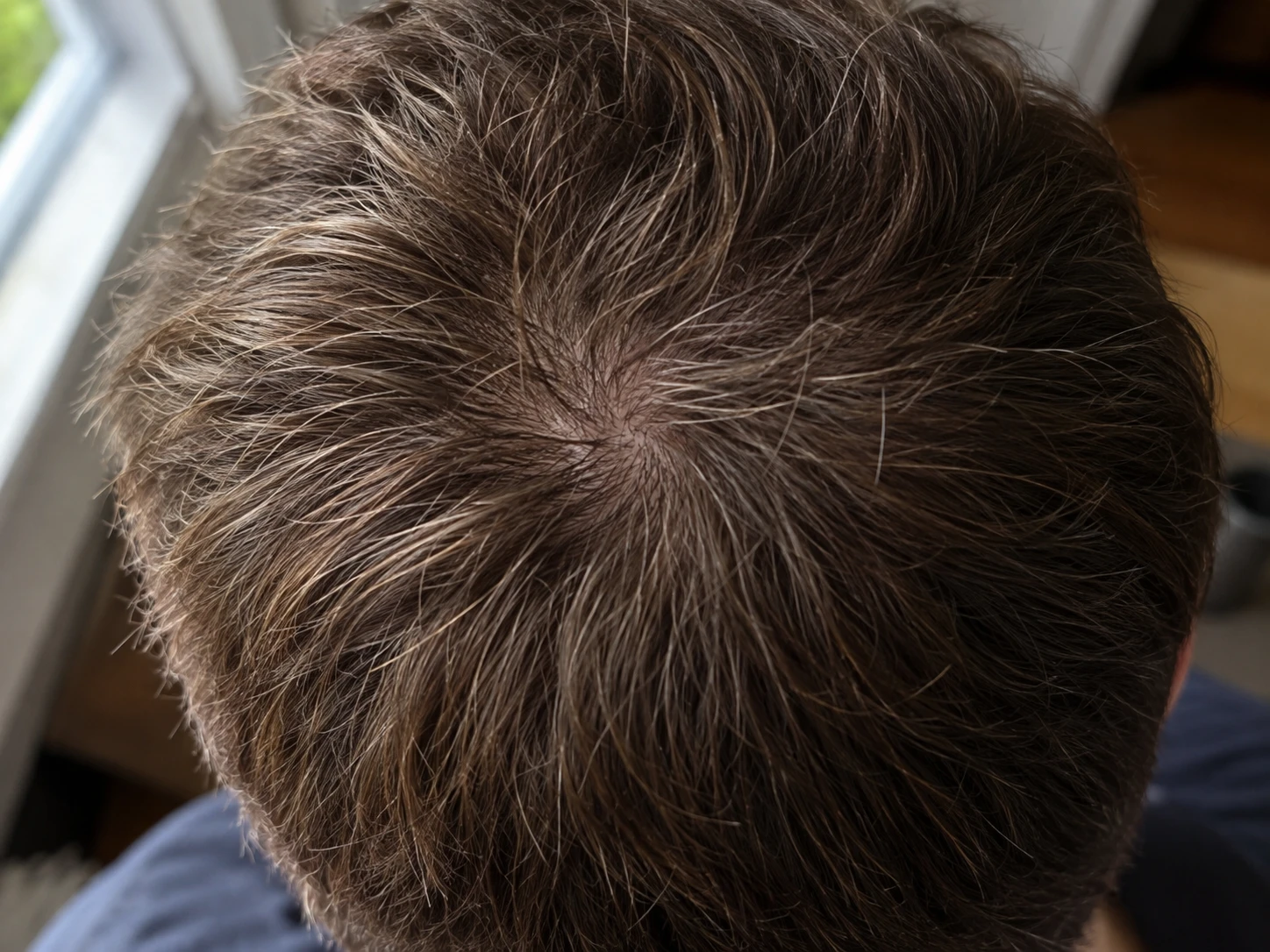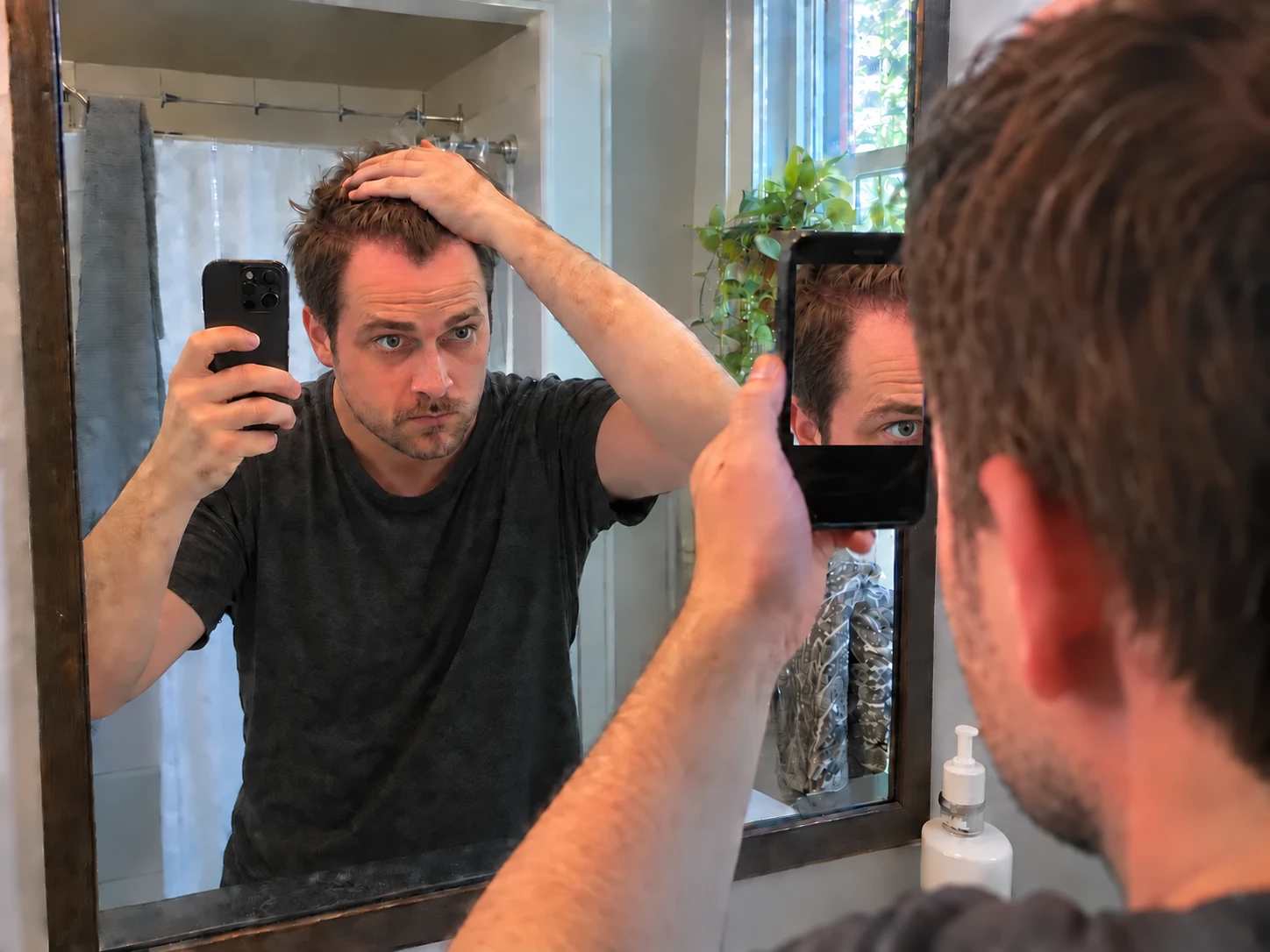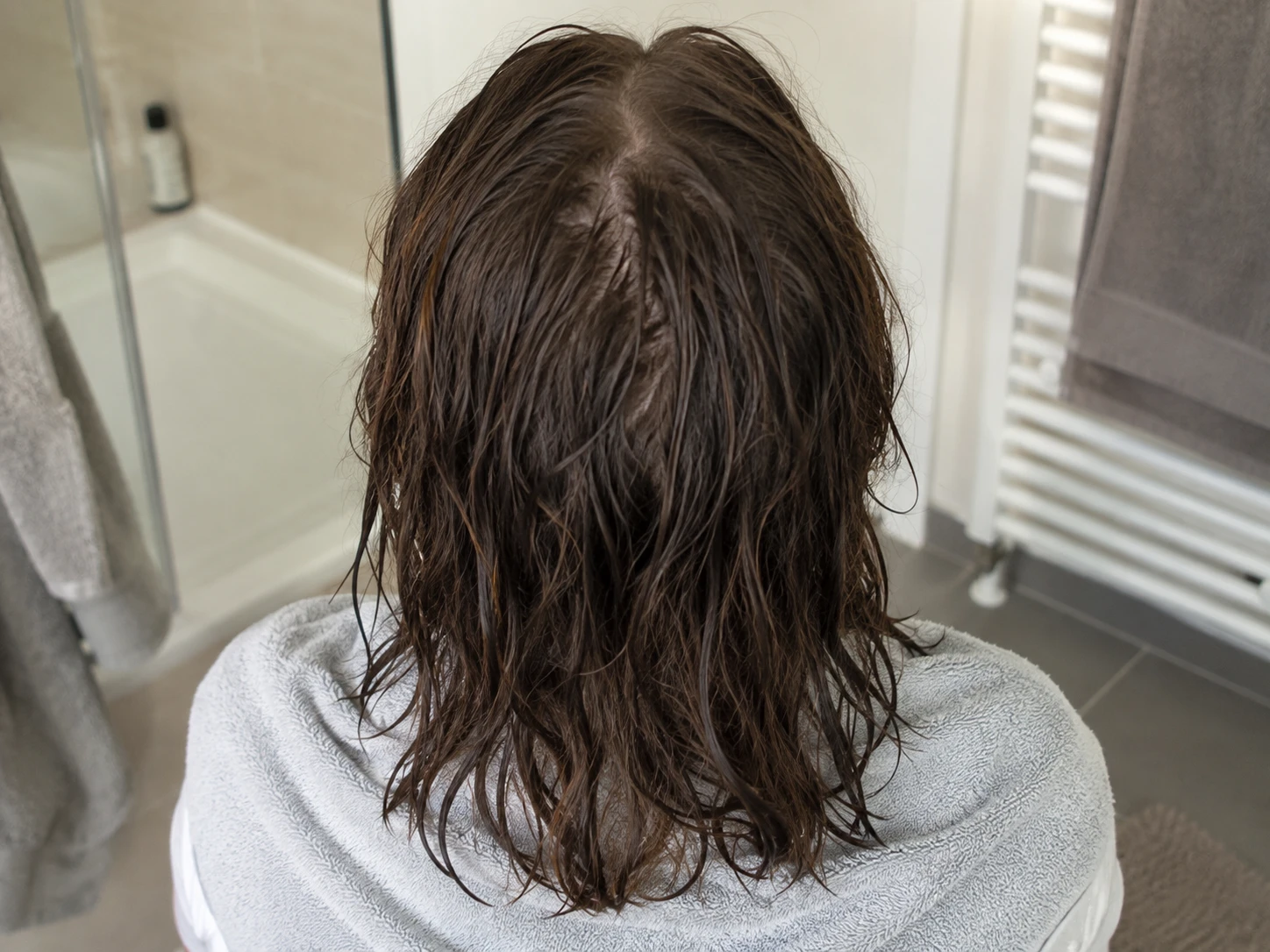
A dedicated Crown view
Find your crown photos without searching through front and top views.
The crown is hard to see and even harder to photograph the same way twice. Plume gives it a named view in every photo set and keeps each date easy to find.
Lighting, distance and camera angle can change how much scalp is visible in a crown photo.
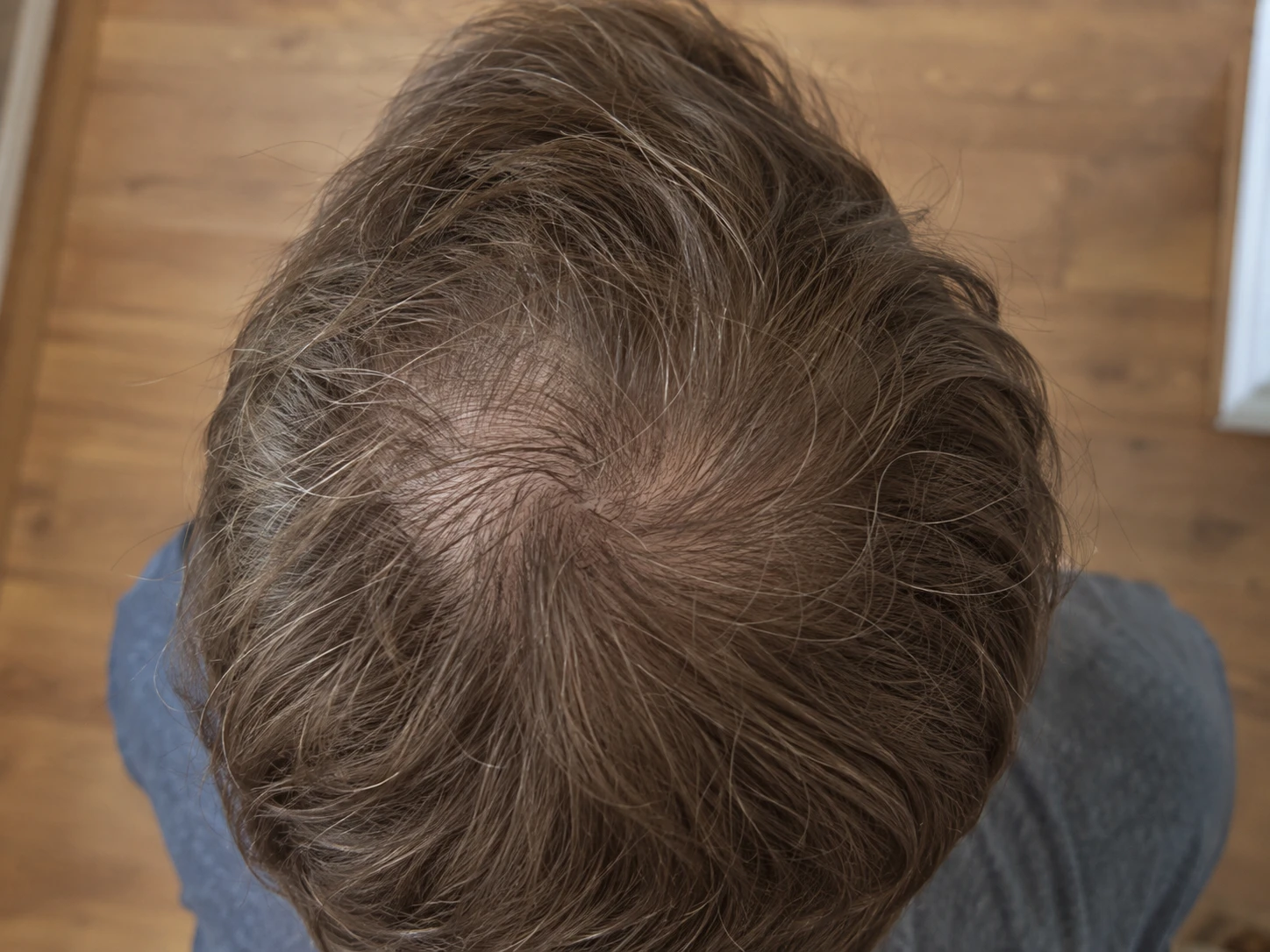
A crown hair loss tracker should keep the crown view separate, dated and easy to repeat. Plume guides the Crown photo as part of every session and keeps it beside the Top and part and Hairline and temples views. You can compare two Crown photos side by side, with a slider, with a blend or with zoom and pan. Plume documents the photos. It does not measure crown density or diagnose hair loss.
Choose a room and light direction you can return to each time.
Follow the Crown prompt. Keep the angle and distance consistent.
Note a haircut, styling change or different lighting beside the date.
Choose two dates and compare the same Crown view side by side.
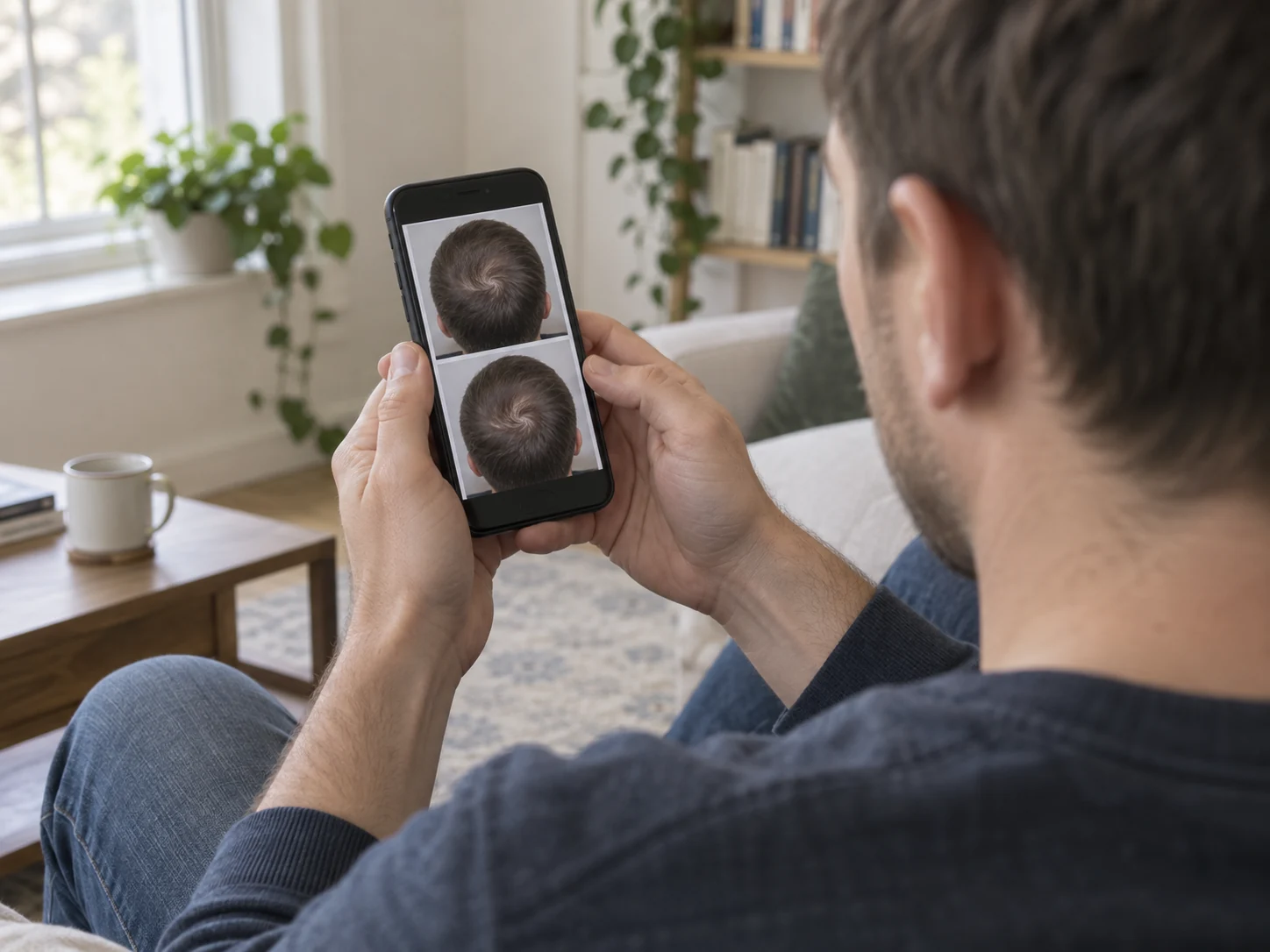
Find your crown photos without searching through front and top views.
Keep a note of haircuts, styling and lighting alongside each photo.
Compare matching views side by side, then slide or zoom for a closer look.
A brighter light or a slightly higher phone can make more scalp visible. Repeat a few simple conditions so your photos are easier to compare.
Add a short note when something changes: a haircut, styling, your routine or the lighting. It stays with the date, alongside your Hairline, Top and Crown views.
Choose two Crown entries and check the lighting and angle first. Then look side by side, or use the slider and zoom to take a closer look.
Repeat the room, light direction, phone orientation, camera distance and hair preparation when practical. Use the Plume Crown prompt each time.
No. Plume keeps dated Crown photos for manual review. It does not calculate density or hair count.
Yes. Choose the Crown view from two dates and use side by side, slider, blend, zoom or pan.
No. A photo documents appearance. Diagnosis and medical interpretation require a qualified clinician.