What matters most
- Wet and dry photos should not be treated as equal comparisons.
- Choose one hair state for your main progress timeline.
- Record wash timing, product, and moisture when they differ.
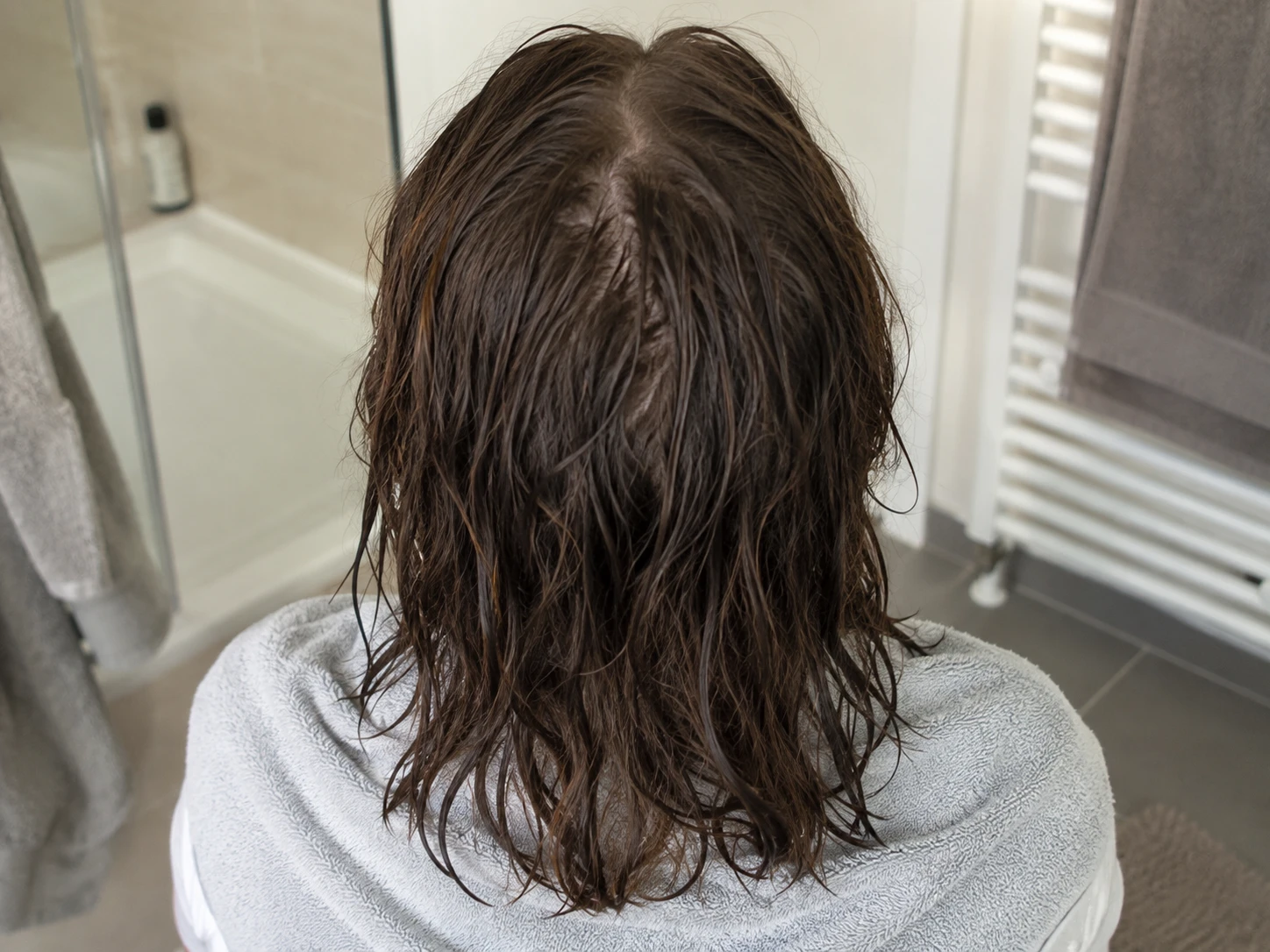
Water makes strands group together. That can reveal more scalp between groups of hair. Dry hair may spread out, lift, or change volume based on texture and styling.
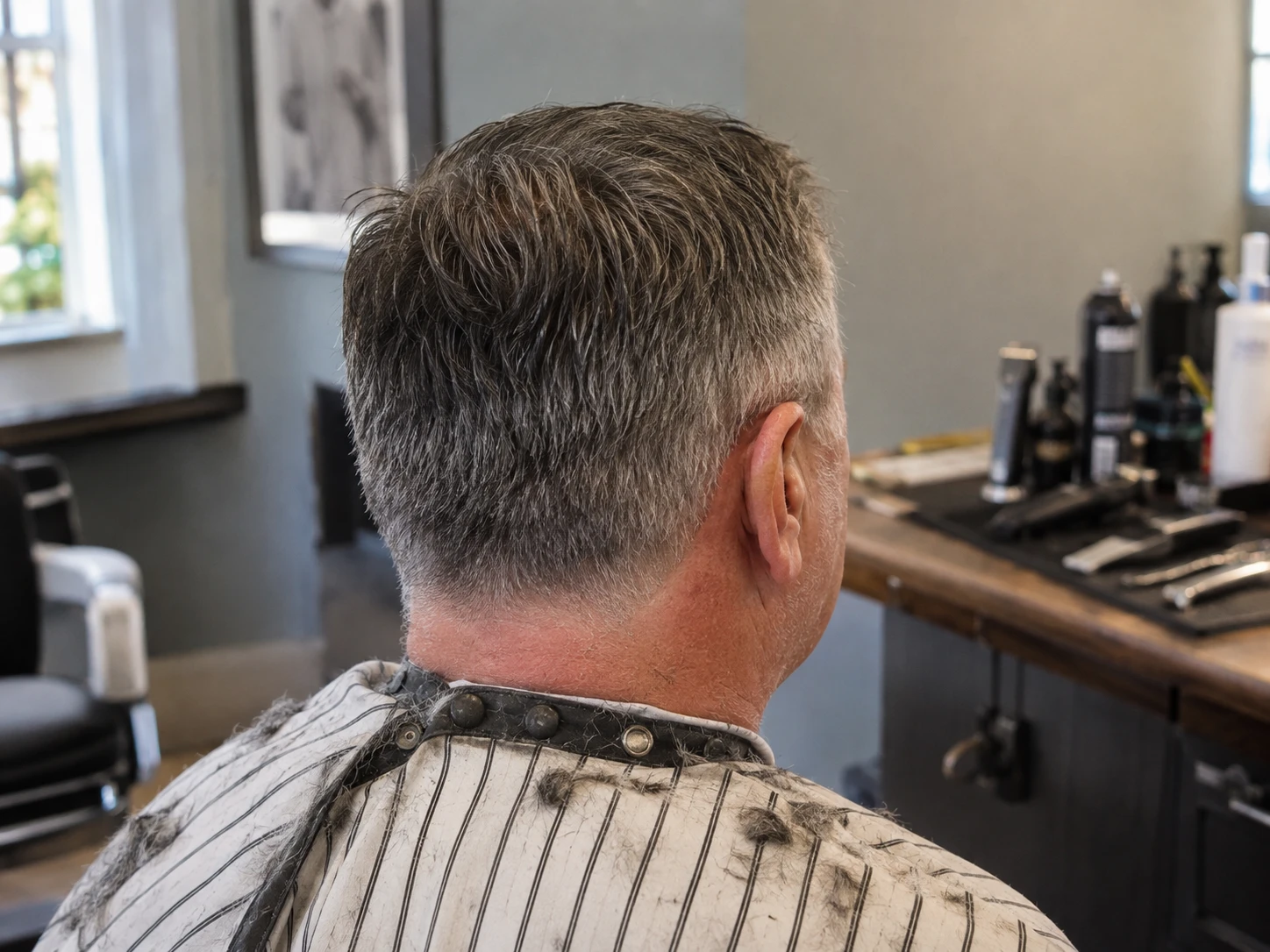
Neither state is automatically the correct one. The useful choice is the state you can recreate without changing the amount of water, product, or styling each time.
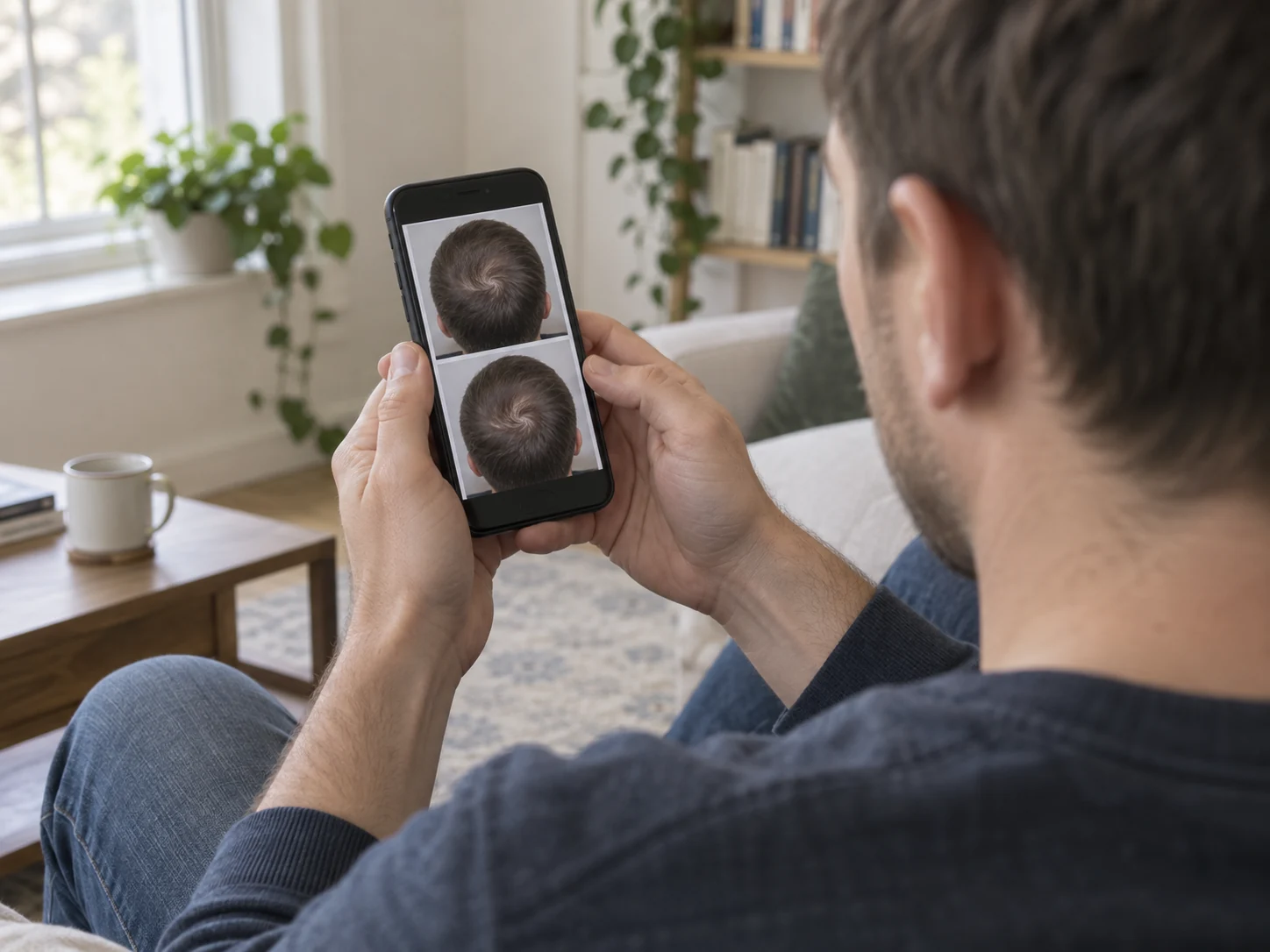
Pick dry or wet hair for your scheduled photos and keep that choice with the baseline. Use the same views, room, light, phone, part, and approximate timing after washing.
If you want both, create two separate series and compare dry with dry and wet with wet. Do not alternate the main timeline without a note.
- Use the same moisture state.
- Keep wash timing similar.
- Use the same product or no product.
- Recreate the same part and comb direction.
Partly dry hair is harder to reproduce than clearly wet or clearly dry hair. Different sections may clump in different ways and the crown can dry faster than the lower hair.
If a session lands between states, keep it as context and mark it clearly. Retake the scheduled set only when you can reproduce the baseline state.
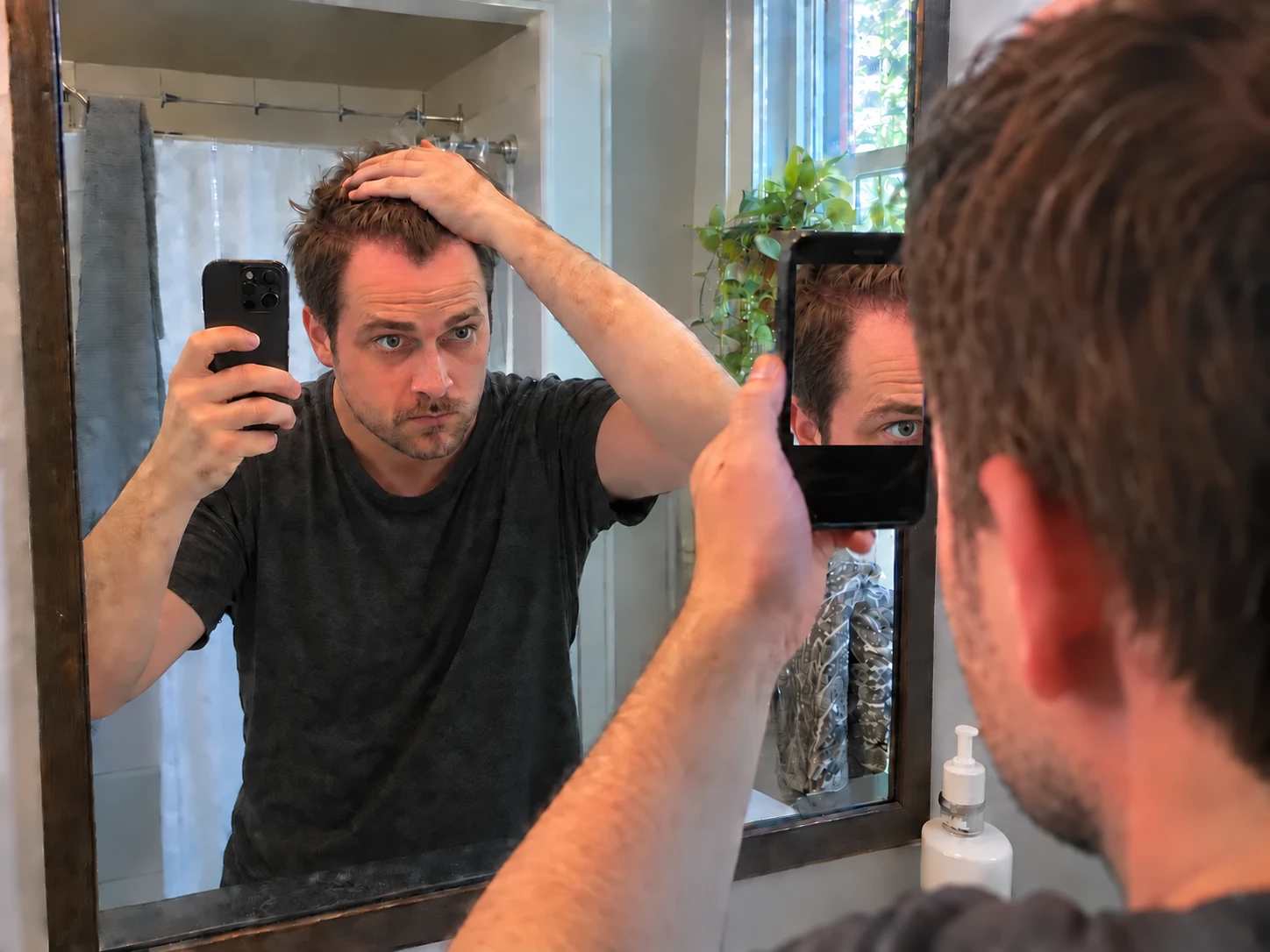
When one photo shows more scalp, first ask whether the hair is wetter, oilier, flatter, shorter, or styled in another direction. Then check the light and camera angle.
The photo preserves appearance under one set of conditions. It does not measure hair density. A clear note about hair state keeps the comparison honest.