What matters most
- Check lighting, angle, distance, hair state, and styling before comparing the hair.
- Compare the same saved view with stable landmarks.
- Review the baseline, latest photo, and the full sequence before writing an observation.
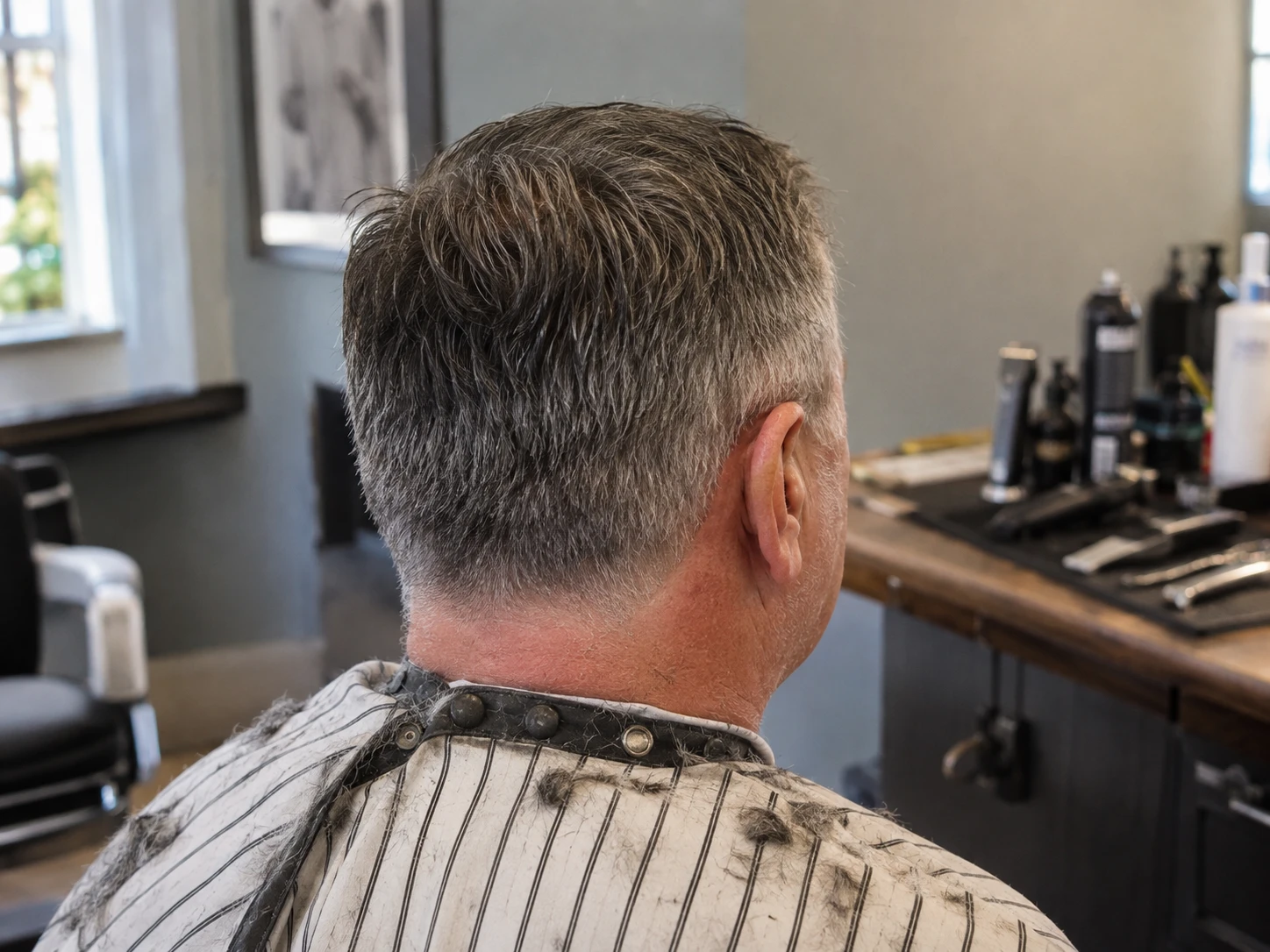
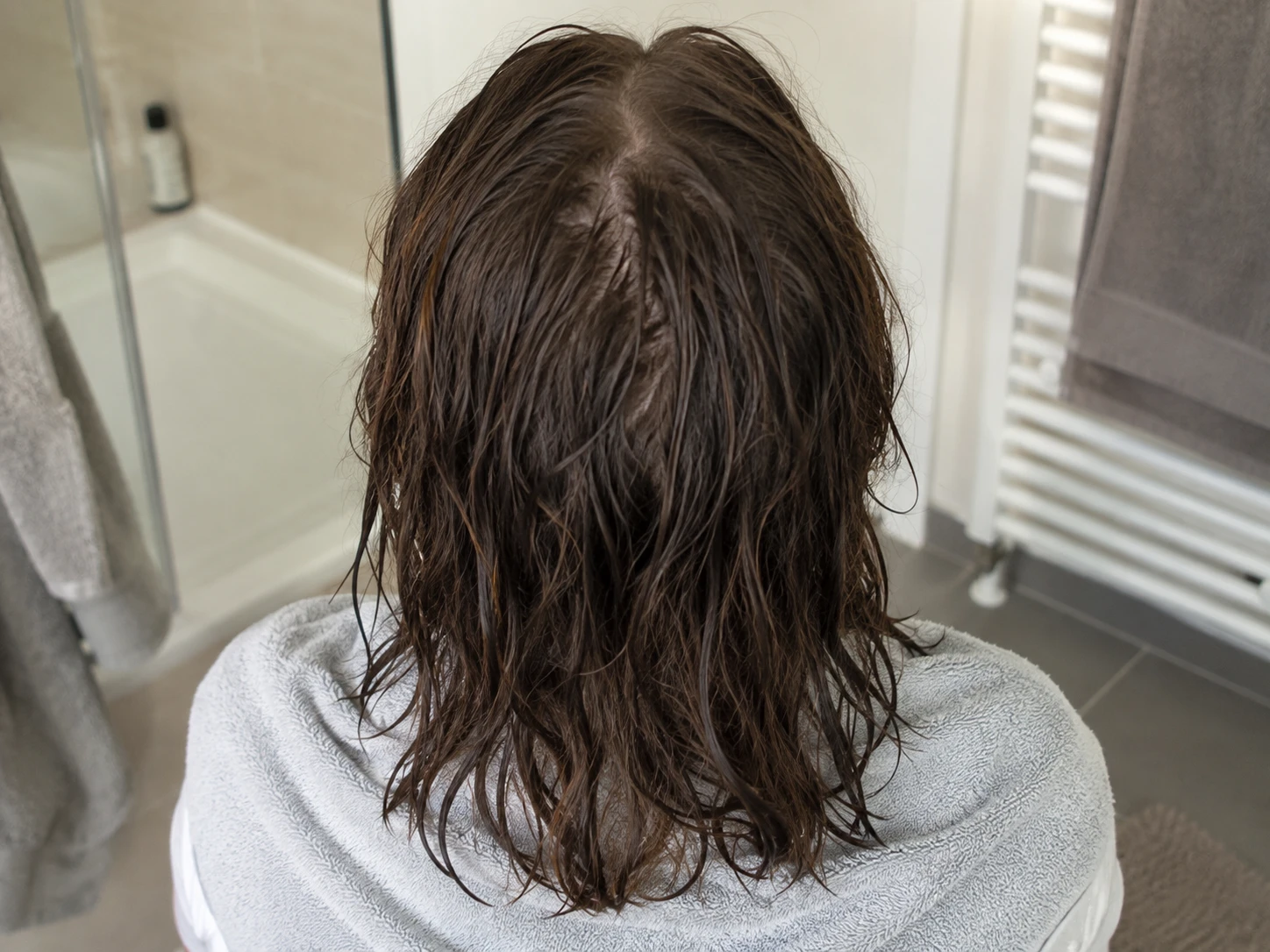
Start with the background, shadows, color, crop, camera height, head tilt, hair length, part, moisture, and product. A change in any of these can change how much scalp appears or where the hairline seems to sit.
If the setup is different, keep the photo and mark the comparison as limited. An imperfect image can still belong in the record when its limits are clear.
- Same saved view and phone lens.
- Similar crop, distance, and head position.
- Similar light direction and brightness.
- Similar hair preparation and styling.
- No appearance filters or digital zoom.
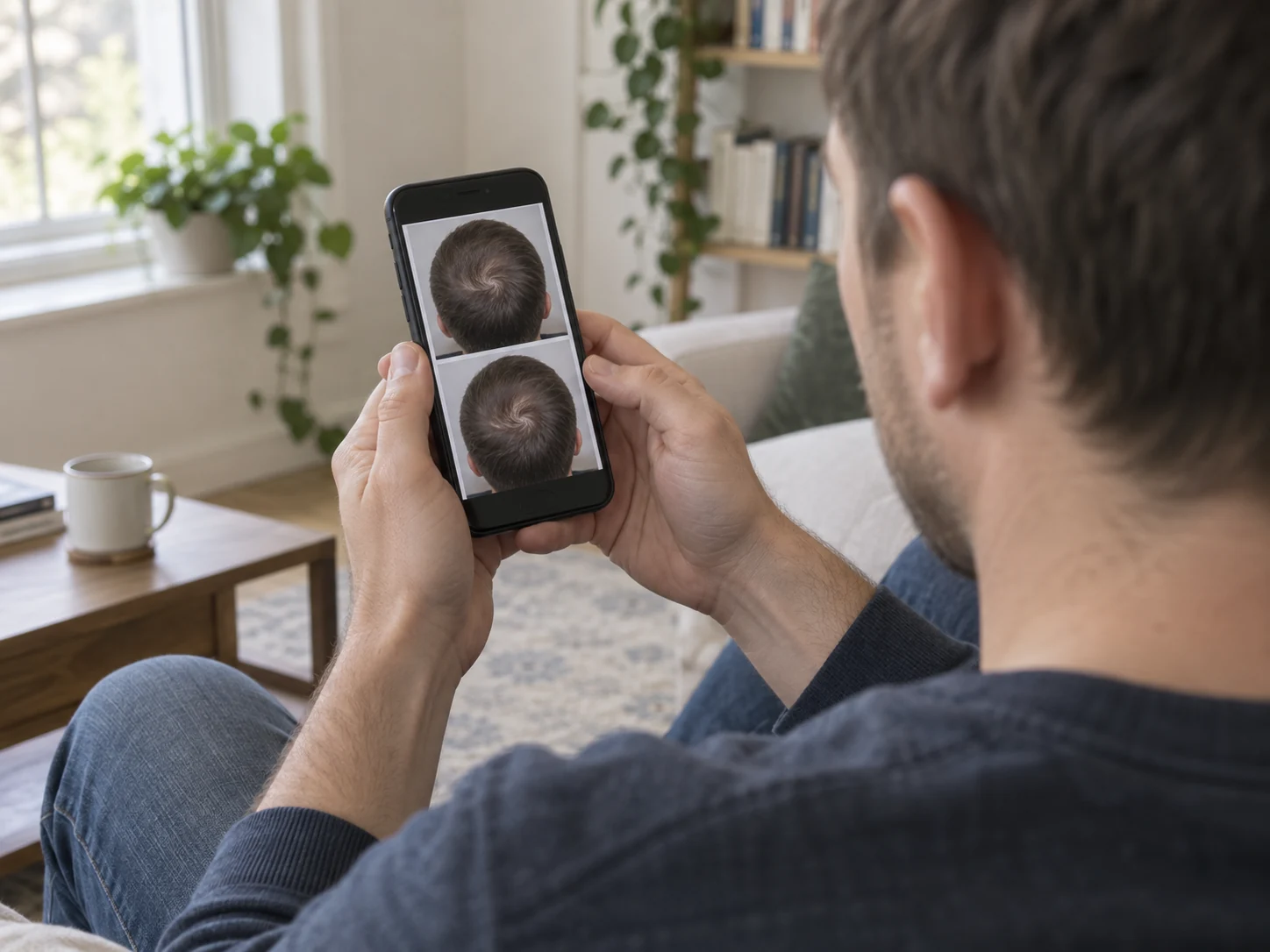
Match front hairline with front hairline, left temple with left temple, and crown with crown. Use the eyebrows and forehead for the front, the ear for temple views, and the center of the natural whorl for the crown.
A slider or blend can help when the landmarks match. Line up the landmarks first and do not stretch one photo to force it into place.
Use plain observations such as more scalp appears along the part in this frame or the latest crown image has a stronger highlight. This separates the visible detail from what you think it might mean.
Photos do not diagnose hair loss, count individual hairs, or prove that a treatment worked. They preserve a visual record that can support a better conversation.
Compare the baseline with the latest photo, then place the sessions in date order. A difference that appears once may line up with a haircut, wet hair, stronger light, a different part, or a missed angle.
Finish by noting one setup improvement for next time. A better lamp position or clearer crown cue may be more useful than forcing a verdict from one pair.