What matters most
- There is no clean same strength and same schedule trial proving that foam or liquid grows more hair.
- Both forms can work, while comfort, styling, cost, and consistency often decide which one fits better.
- Foam avoids propylene glycol in the brand label cited here, but it is not guaranteed to prevent scalp reactions.
Minoxidil foam and liquid can both support regrowth. Research does not give us a clean winner because the direct trials compared different strengths and different use schedules rather than matching foam and liquid on every detail.
That means claims that foam is stronger or liquid always works better go beyond the evidence. The practical winner is often the form a person can use consistently according to the correct label and medical guidance.
A 2011 randomized trial in 113 women compared a higher strength foam used once daily with a lower strength solution used twice daily. Foam met that study's standard for similar efficacy and caused less local intolerance and less interference with styling.
A larger 2016 randomized trial studied the same two routines in 322 women. Hair count gains were almost identical at 24 weeks, but the result narrowly missed the prespecified statistical standard for noninferiority. It is fair to say both groups improved. It is not fair to call the products proven equivalents in every setting.
A placebo controlled trial in 352 men found that minoxidil foam increased hair count and improved participant ratings after 16 weeks. That establishes that foam can work for male pattern hair loss.
The comparison in that trial was inactive foam, not liquid minoxidil. It cannot answer whether foam regrows more hair than an active solution.
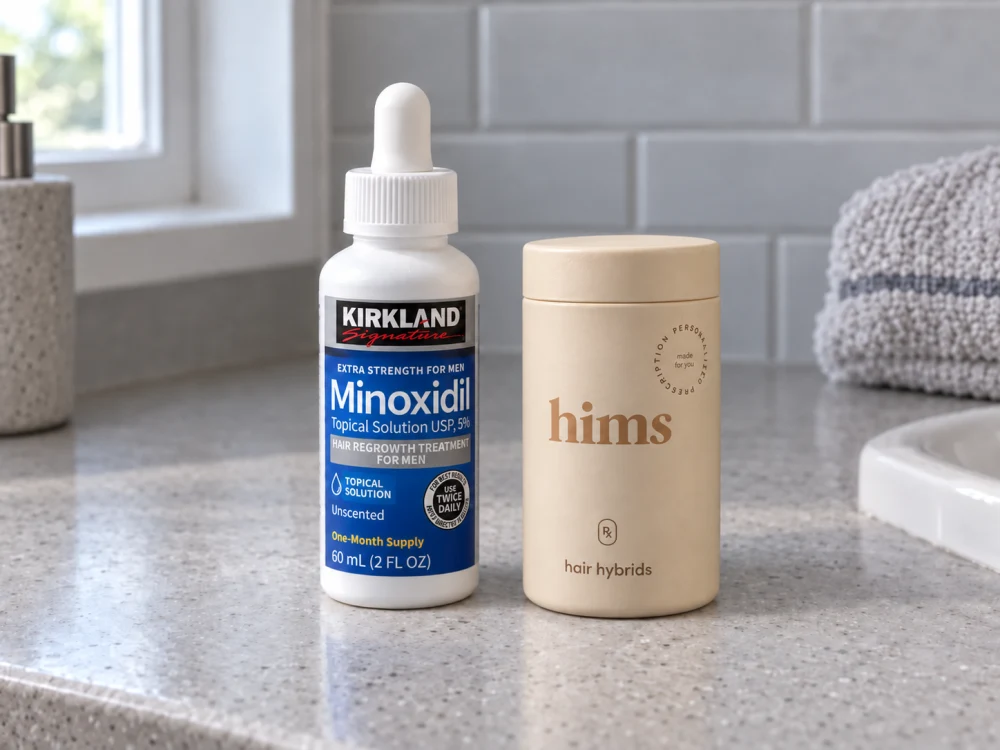
The current brand solution label cited below lists alcohol, propylene glycol, and water. The matching foam label does not list propylene glycol. That difference may matter for some people with irritation, residue, or styling concerns. Other brands can use different inactive ingredients, so the actual Drug Facts panel matters.
Foam is not an allergy proof option. A 2024 review of confirmed contact allergy cases found that minoxidil itself was the most frequent allergen, followed by propylene glycol. Persistent itching, redness, scaling, or swelling deserves medical attention instead of repeated product switching by guesswork.
Approved directions differ by formulation and by whether a product is labeled for men or women. Follow the exact label for the product in your hand and ask a clinician when the cause of loss is uncertain, the scalp is irritated, or health conditions change the risk.
Keep the form and routine stable long enough to create a useful record. Plume can hold monthly photos, real dates, and notes about irritation, shedding, styling, or a product change. It cannot prove that foam or liquid caused a change, but it can make the timeline much easier to discuss.