What matters most
- Hairline shape and visible scalp coverage are different photo questions.
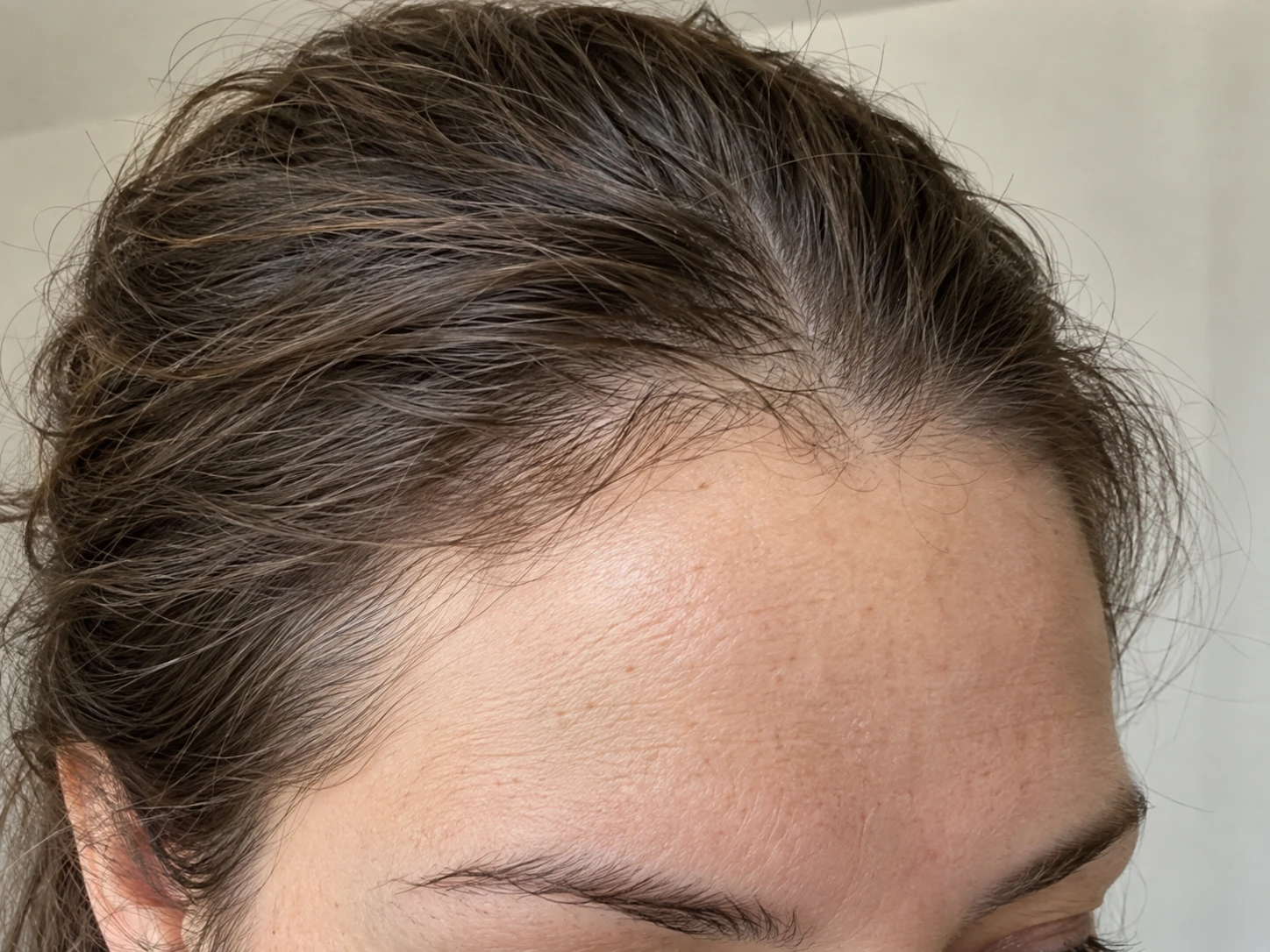
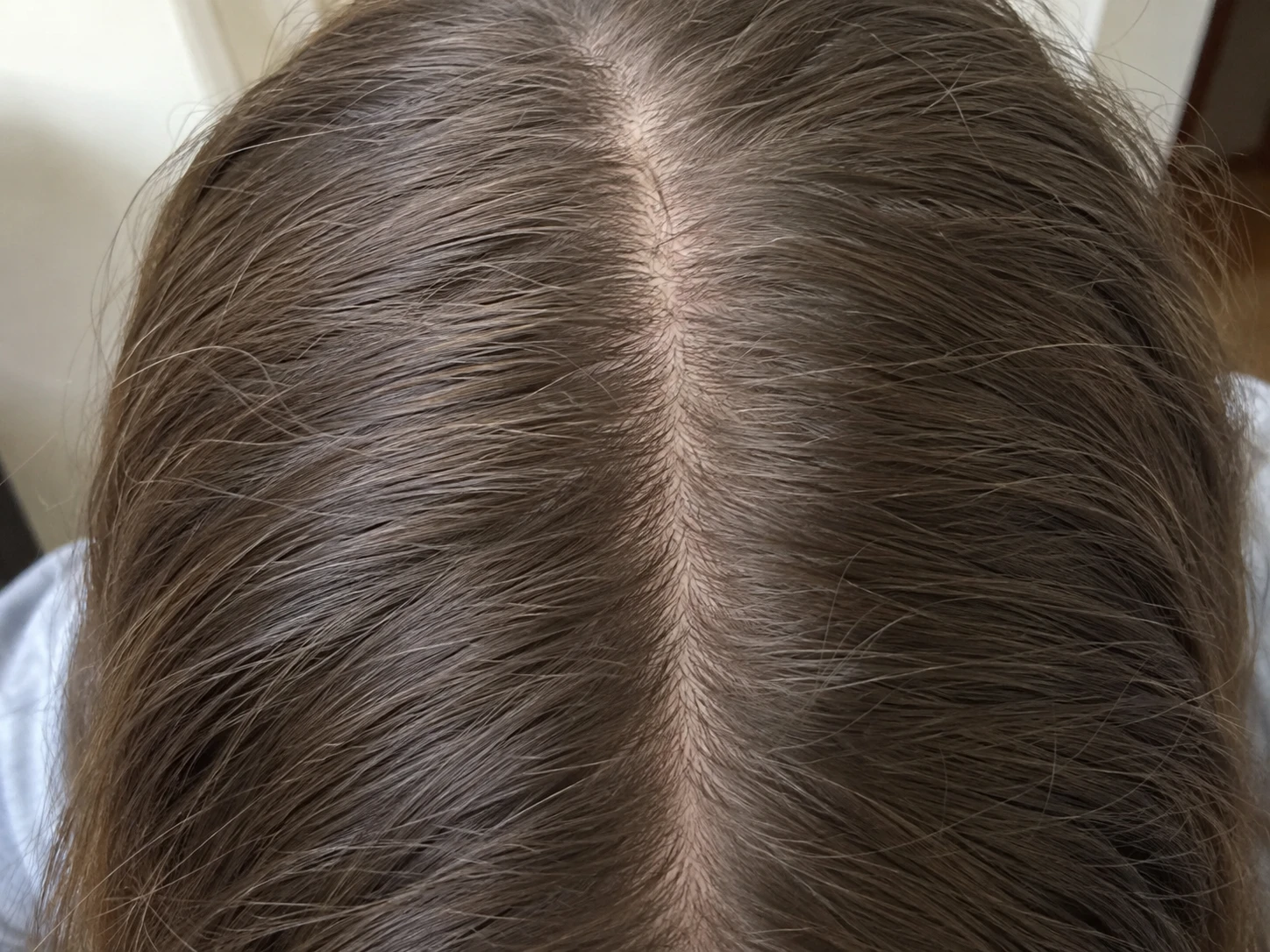
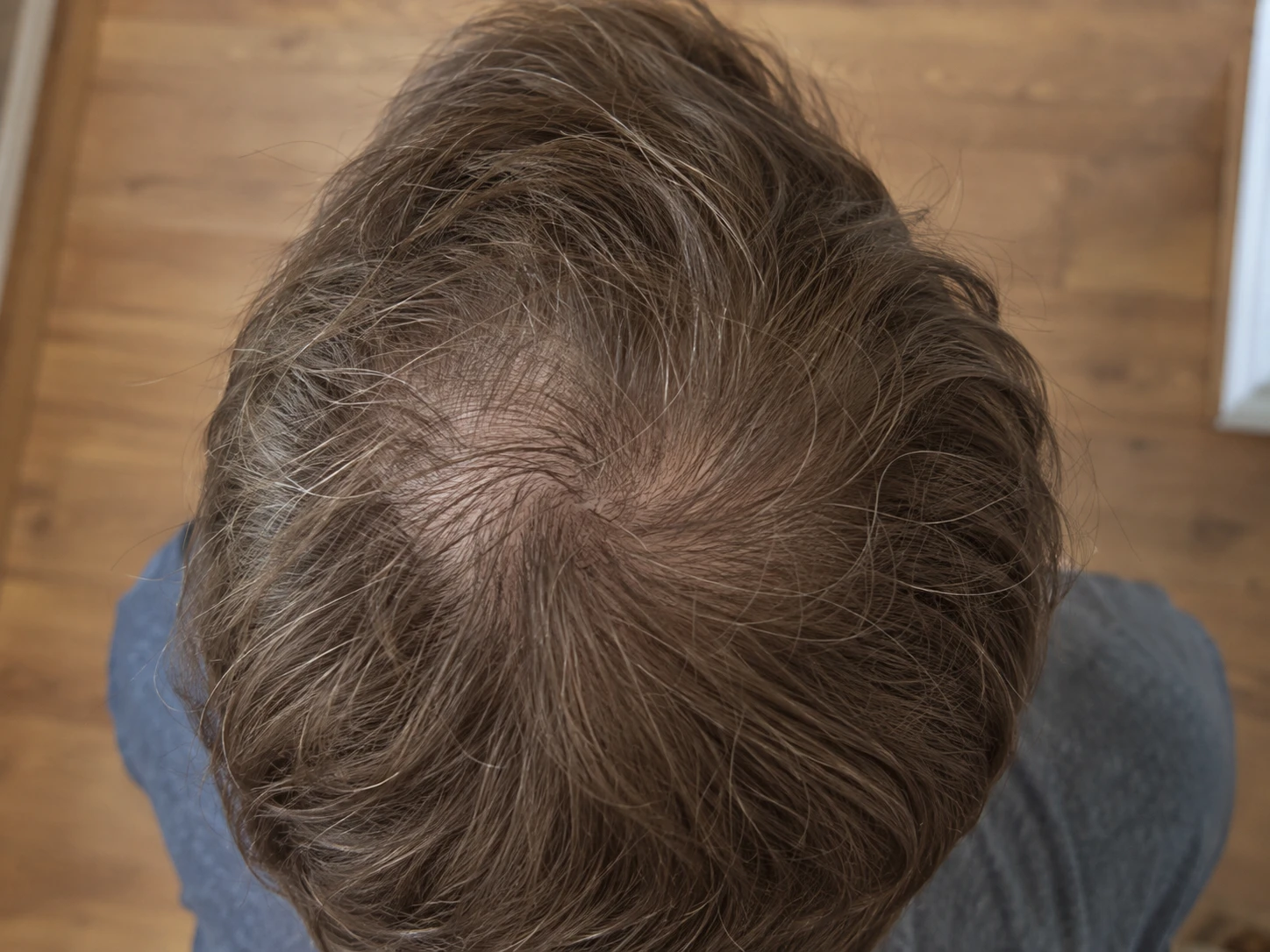
- Front and temple views show the edge of the hairline. Top, part, and crown views show visible coverage.
- A photo does not measure hair density or explain why a visible change occurred.
Hairline tracking focuses on the visible border between the forehead and hair, including both temples. Coverage tracking focuses on how much scalp can be seen through areas such as the part, top, or crown.
One image rarely answers both questions well. A front photo can show the shape of the hairline but says little about the crown. A top photo can show the part while making the frontal edge difficult to judge.
Take one centered front photo and one photo of each temple. Keep the eyebrows, upper forehead, and sides of the head in a stable crop. These landmarks make changes in tilt and distance easy to notice.
Arrange the front hair the same way every time. A different part, clip, or amount of pulling can change the visible outline even when the hair itself has not changed.
Take separate photos of the top, part, and crown. Center the crown on the same natural whorl and recreate the part with the same comb and starting point.
Hair length, clumping, moisture, and styling products can all change how much scalp appears in a photo. Keep those conditions similar and record them when they are not.
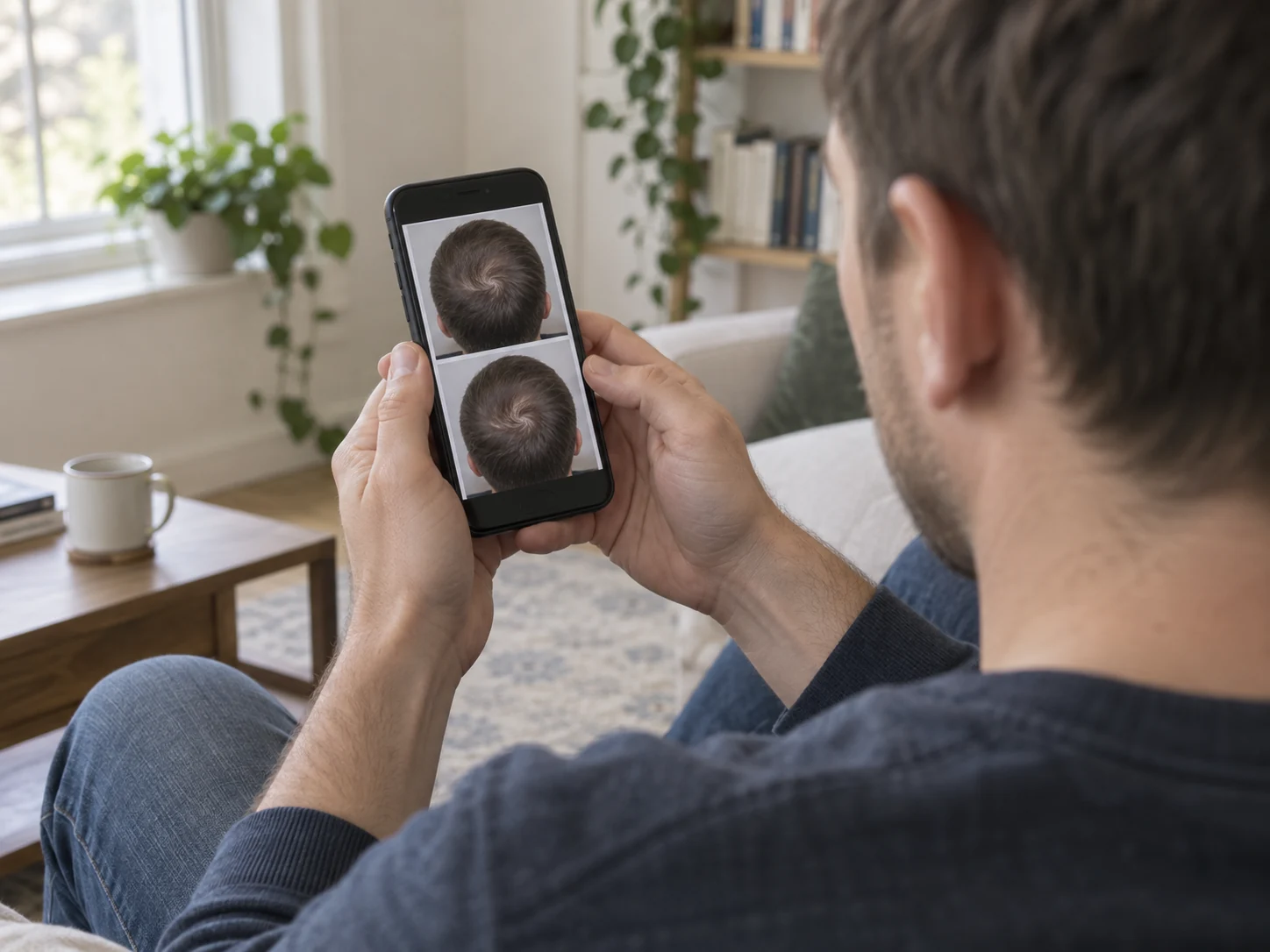
A phone photo can preserve visible appearance. It cannot count follicles, measure true density, diagnose a condition, or prove that a routine caused a change.
Describe what the image shows, such as more scalp appears along the part in this photo. Then note any setup difference that could affect the view. A clinician can evaluate medical questions that the photo cannot answer.