
What matters most
- There is no universal medical rule for how often to take hair progress photos.
- A monthly photo session is a practical starting point because it is easy to remember and review.
- A repeatable setup matters more than taking a large number of photos.
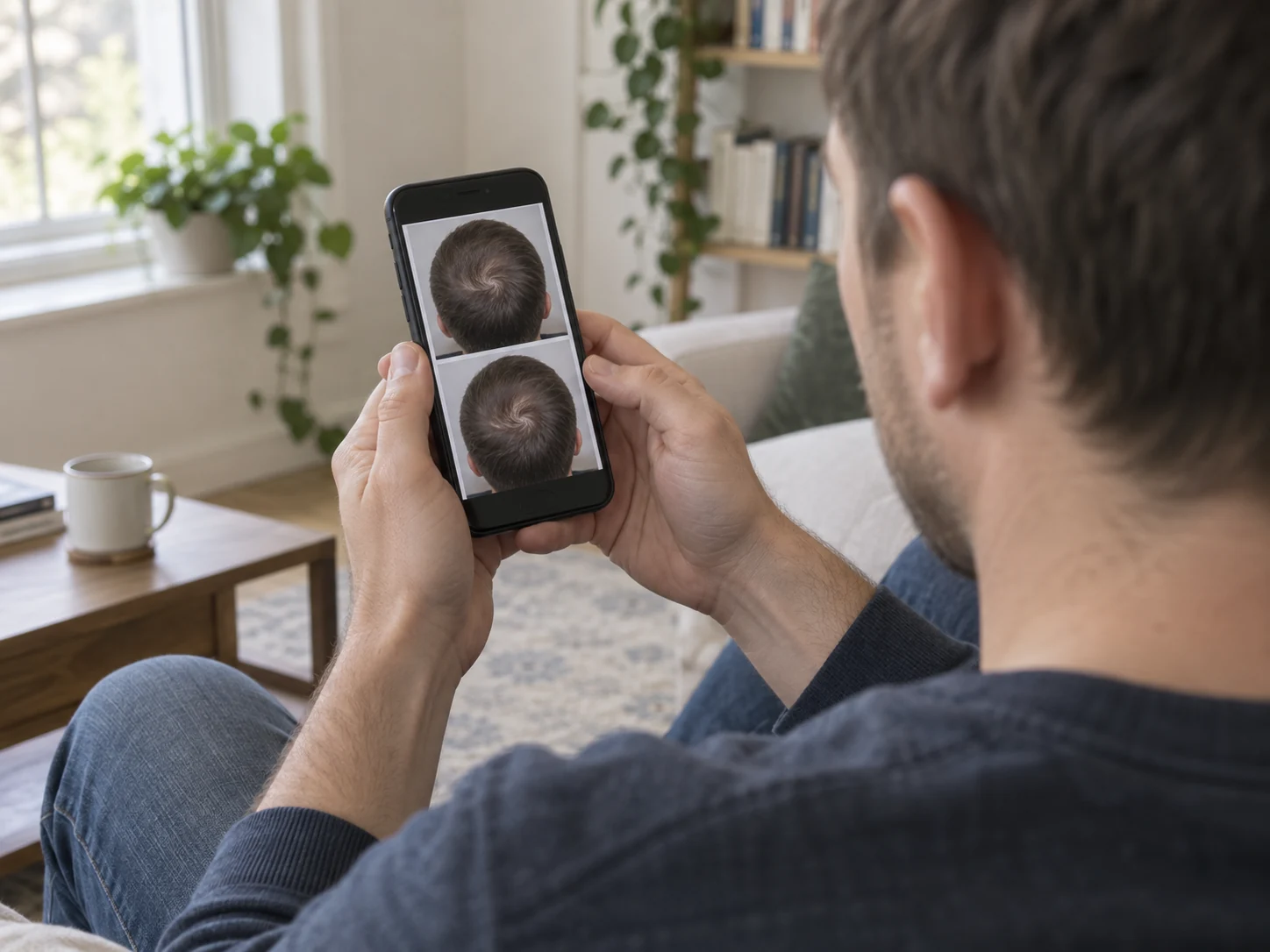
Hair progress photography is useful when each session can be compared with the last one. Research supports standardized photos for documenting hair loss, but it does not establish one perfect interval for personal photos.
That means your schedule should be simple enough to keep. Monthly photos work well as a practical routine for many people. This is a tracking choice, not a medical rule and not a promise that visible change will appear every month.
Choose a clear trigger, such as the first Sunday of each month or the same calendar date. Take the full set in one session so the hairline, temples, top, and crown all share the same conditions.
Plume keeps each session organized by its real capture date. If you miss a month, continue with the next honest date. There is no reason to recreate a photo or guess when it was taken.
- Use one recurring reminder.
- Take every saved view during the same session.
- Keep the real date with every photo set.
Hair can look different from one day to the next because of light, moisture, styling, product, wash timing, and camera position. Daily photos may capture those setup changes more clearly than they capture a useful longer view.
You can still save extra photos when something matters to you. Keep the scheduled set as the main comparison and treat extra images as context, not as a replacement for the repeatable session.
A longer interval is fine if monthly sessions become hard to maintain. A shorter interval is also fine if you can reproduce the setup without turning the process into a daily judgment.
When you change the schedule, add a dated note. Do the same after a major haircut, a new part, or a change from dry photos to wet photos. The note helps explain why the timeline looks different later.