
What matters most
- Several tested laser combs and helmets increased hair counts more than sham devices in short trials of pattern hair loss.
- The evidence belongs to the specific devices and populations studied, not every red light cap sold online.
- FDA clearance is based on substantial equivalence and is not blanket FDA approval of low level laser therapy.
Low level laser therapy has real clinical trial evidence for androgenetic alopecia. Several randomized trials found that specific active combs, caps, or helmets increased hair counts or density more than sham devices over about 16 to 26 weeks.
The evidence is promising, but it is not a guarantee of visible regrowth. It does not show that every device works, that more lights are better, or that results last after use stops. The studies tested particular products, light sources, schedules, and groups of people.
A 2009 trial in 110 men who completed the study found a greater increase in terminal hair density with a specific laser comb than with its sham device at 26 weeks. Four later trials randomized 128 men and 141 women across several models. In the people included in the efficacy analysis, active groups gained about 18 to 26 terminal hairs per square centimeter from baseline, while sham groups gained about 2 to 9, depending on the comparison.
A 2018 study gave 100 participants active light on one side of the scalp and sham light on the other. At 24 weeks, measured hair coverage was 14.2 percent on the active side and 11.8 percent on the sham side. A 2020 helmet study also reported greater density and thickness with active treatment at 16 weeks, but participant satisfaction did not differ significantly in the published review table.
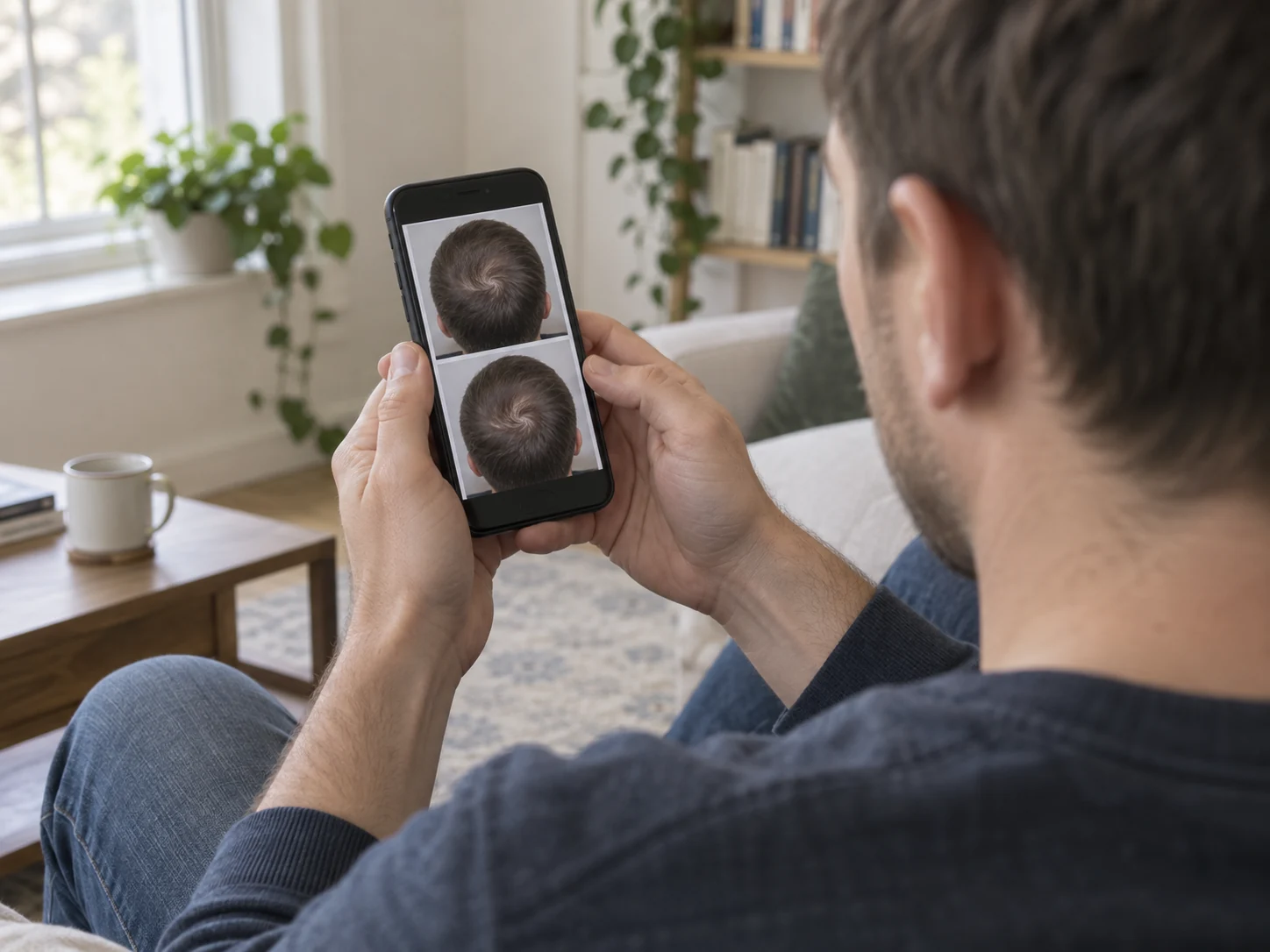
Meta analyses of sham controlled trials generally favor active low level light devices for hair density. Most studies measured hairs in a small marked scalp area with magnified images. That is useful for research, but a statistically clear count difference may not look dramatic in the mirror.
Most trials lasted less than six months. There is less evidence about long term maintenance, severe pattern hair loss, direct comparisons between devices, and what happens after treatment stops. Some major studies were funded or supplied by device makers, which should be visible when the evidence is summarized.
Specific laser hair growth devices are cleared in the United States as Class II devices through the FDA 510(k) process. This process asks whether a device is substantially equivalent to a legally marketed predicate device. It is different from the premarket approval process used for high risk devices.
A June 2026 FDA clearance summary covers one specific helmet family for males with Norwood Hamilton classifications IIa to V, females with Ludwig Savin classifications I to II, and people with Fitzpatrick skin phototypes I to IV. The exact indication matters. A registration claim, an online listing, or red light by itself does not show that a product has the same clearance or evidence.
Trials generally reported few serious problems during their short follow up, but that does not establish zero risk or lifetime safety. Follow the labeling and eye safety instructions for the exact cleared device and never stare into laser light. Ask a clinician before use when the diagnosis is uncertain, the scalp is inflamed, light sensitivity is present, or a medicine may increase light sensitivity.
These trials focused on pattern hair loss. Sudden, patchy, painful, inflamed, or scarring loss needs a medical assessment rather than a device purchase. If a clinician includes light therapy in a plan, save the device name, real start date, and instructions, then use consistent monthly photos. The record can show appearance over time, but it cannot prove that the device caused a change.